Announcement

Announcement
Annona
Plant family
Custard apple family (Annonaceae)
Season Overview
Propagating
Planting
Harvest
Harvest
J
F
M
A
M
J
J
A
S
O
N
D
1ST YEAR
FOLLOWING YEARS
Details


Light requirement
Sunny

Water requirement
Moist

Soil
Medium (loamy)
Nutrient requirement
Medium

Dark germinator

Germination temperature
20 - 28 °C (Degrees Celsius)

Plant distance
500 cm

Row spacing
600 cm

Seeding depth
2.5 cm
Instructions
Description
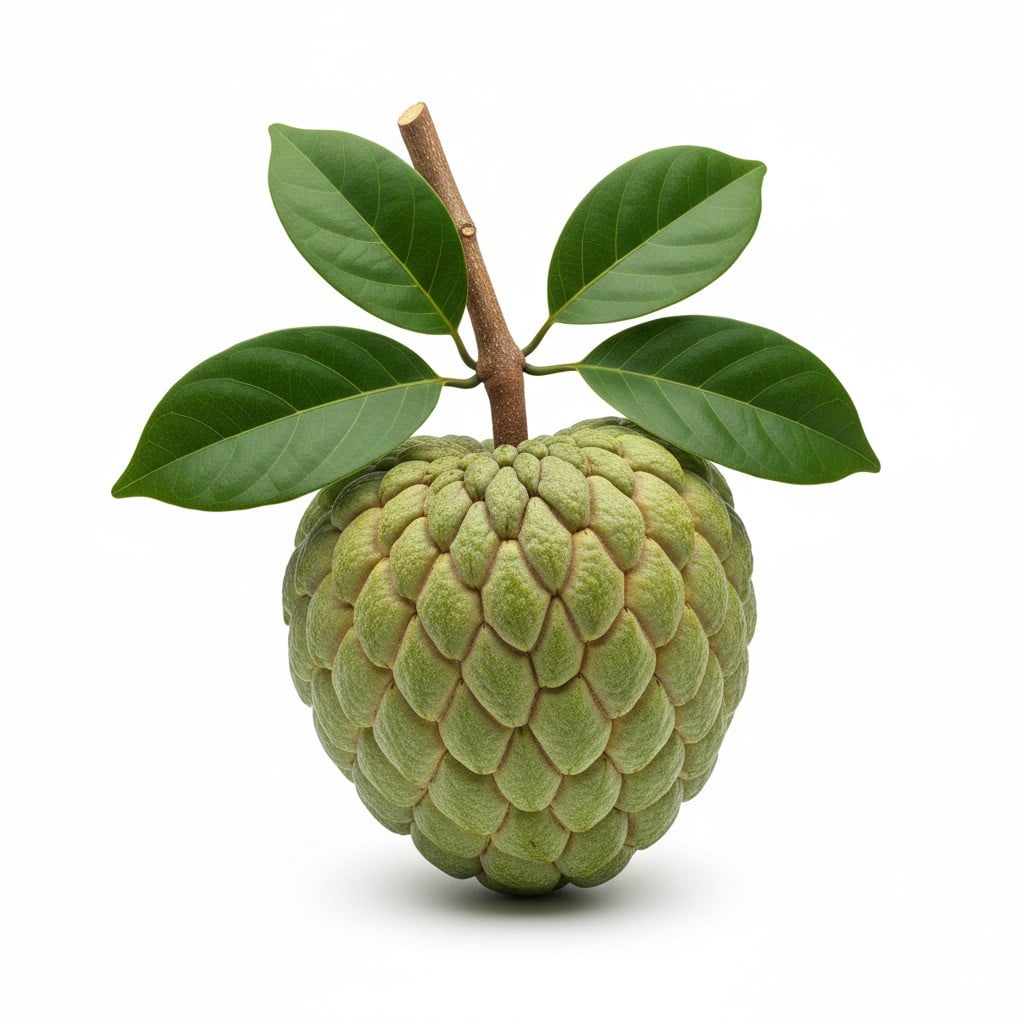
Annona (possibly from the Taíno word Anón for the cherimoya or from the Latin Annus, meaning "year," "annual") is a genus of plants in the family Annonaceae. It includes about 175 species in the tropics and subtropics. Some of these species are commercially important as fruit-bearing trees, such as the cherimoya, the prickly custard apple, or the cinnamon apple. Appearance and Leaves Annona species grow as evergreen to deciduous trees or shrubs. They often form taproots, and some species develop prop roots as mature trees. The stiff branches are slender and cylindrical. The lenticels are raised. The leaves, arranged alternately on the branches, are petiolate. The leathery or papery, simple leaf blade is glabrous or downy. Stipules are absent. Flowers Most species are protogynous. The flowers are solitary or in clusters on flower stalks that possess bracts. The hermaphroditic, usually three-, rarely four-petaled flowers have an intense, fruity fragrance. The raised flower base (receptacle) is convex to more or less spherical or oblong. The usually three, rarely four sepals fall early and are smaller than the petals. There are two whorls with usually three, rarely four, mostly fleshy petals. The inner petals are usually reduced. There are many stamens and many superior styles. Fruits and Seeds The egg-shaped to nearly spherical, fleshy aggregate fruits (syncarp) consist of berries and have a very variable surface with a firm rind, which in some species is equipped with soft spines that arise from the styles. The seeds are egg-shaped to ellipsoid, bean-shaped with a hard seed coat. The seeds sometimes possess an arillus. Uses The fruits are eaten raw or processed into drinks and ice cream. The seeds of the Annona fruit are used by children in Sri Lanka as a game similar to English football. Acetogenins can be isolated from all parts of the plant. This chemical class is characterized by its insecticidal and anti-tumor effects. The leaves of Annona senegalensis are used in West Africa to relieve insect bites. Toxicology The neurotoxin Annonacin, contained in Guanábana (soursop), appears to be the cause of a neurodegenerative disease that occurs only on the Caribbean island of Guadeloupe and is likely linked to the consumption of plants containing annonacin. This is a so-called tauopathy, which is associated with a pathological accumulation of the tau protein in the brain. Experimental results have shown for the first time that the plant neurotoxin Annonacin is indeed responsible for this accumulation.
Origin:
tropical rainforests, mountainous forested landscapes, coastal regions, South and Central America, Southeast Asia, West Africa
Growing tips
🌞 Location & climate - Sun: 6-8 hours of direct sun daily for good growth and fruit formation. - Temperature: 20-30 °C is ideal; damage occurs below 10 °C. - Frost protection: Can only be cultivated in a tub or conservatory in Germany. 🌱 Soil & substrate - Soil type: Loose, humusy, well-drained (sand-loam mixture). - pH value: slightly acidic to neutral (6.0-7.0). - Drainage: Avoid waterlogging at all costs → container with drainage layer. 💧 Water & nutrients - Watering: Keep evenly moist, but not too wet. - Fertilization: Regularly with organic fertilizer or liquid fertilizer during the growth phase. - Dormant phase: Water less in winter, do not fertilize. 🌸 Flowering & pollination - Pollination: Many species are pre-female protogynous → self-pollination difficult. - Practice: In Central Europe, hand-pollination is often necessary to obtain fruit. 🍏 Fruit & harvest - Fruit: Ripe when the skin becomes soft and can be easily pressed in. - Seeds: Toxic - do not consume. - Uses: Eat fresh, process into drinks or desserts.

Companion Plants

Antagonistic Plants
Abyssinian cabbage / Ethiopian mustard
Apple
Asian Pear / Nashi Pear
Aubergine / Eggplant
Beetroot
Broccoli
Broccoli raab / Stem cabbage / Cima di rapa
Brussels sprouts
Brussels sprouts
Cabbage (Cabbage)
Cabbage (Pointed cabbage)
Cabbage (red cabbage)
Cabbage (Savoy cabbage)
Cauliflower
Chili
Chinese kale - Kai-lan / Chinese broccoli
Collard greens
Collard greens (Kale)
Collard greens (Tuscan kale / Dinosaur kale / Palm tree kale)
Cucumber (Caigua)
Cucumber / Gherkin
Fennel
Florence fennel / Finocchio
horse chestnut
Kohlrabi / German turnip / Turnip cabbage
Lovage
Melon (Sugar melon)
Melon (Watermelon)
Mint
Mizuna / Japanese mustard greens
Napa cabbage / Chinese cabbage
Okra
Ornamental pumpkin
Pak Choi
Pear
Pepper / Paprika
Plum
Plum (tree)
Potato
Pumpkin / Squash
Rapeseed - Sheer cabbage / Siberian cabbage
Rapini / Broccoli rabe
Rock pear (Amelanchier)
Rutabaga / Swedish turnip
Sea coal
Sour cherry / Tart cherry
Tomato (Bush tomato)
Tomato (Cocktail bush tomato)
Tomato (Cocktail Stake Tomato)
Tomato (Stake tomato)
Turnip
Turnip greens - Choy Sum / Chinese flowering cabbage
Turnip greens - Mizuna
Turnip greens - Tatsoi
Turnips - Oilseed turnips
Turnips - Wild turnips
Vegetable cabbage - Forage cabbage
Vegetable cabbage - Ribbed cabbage / Portuguese cabbage
Vegetable cabbage - wild cabbage / ancient cabbage
Walnut family
Wild Cherry / Bird Cherry / Sweet Cherry
Diseases
Root Rot
Black spot of roses
Grey mold
Angular leaf spot of cucumber
Powdery mildews
Pests
Schildläuse
Mealybugs
Thrips
Spider mites
Spotted wing drosophila
Aphids