Citrus plants

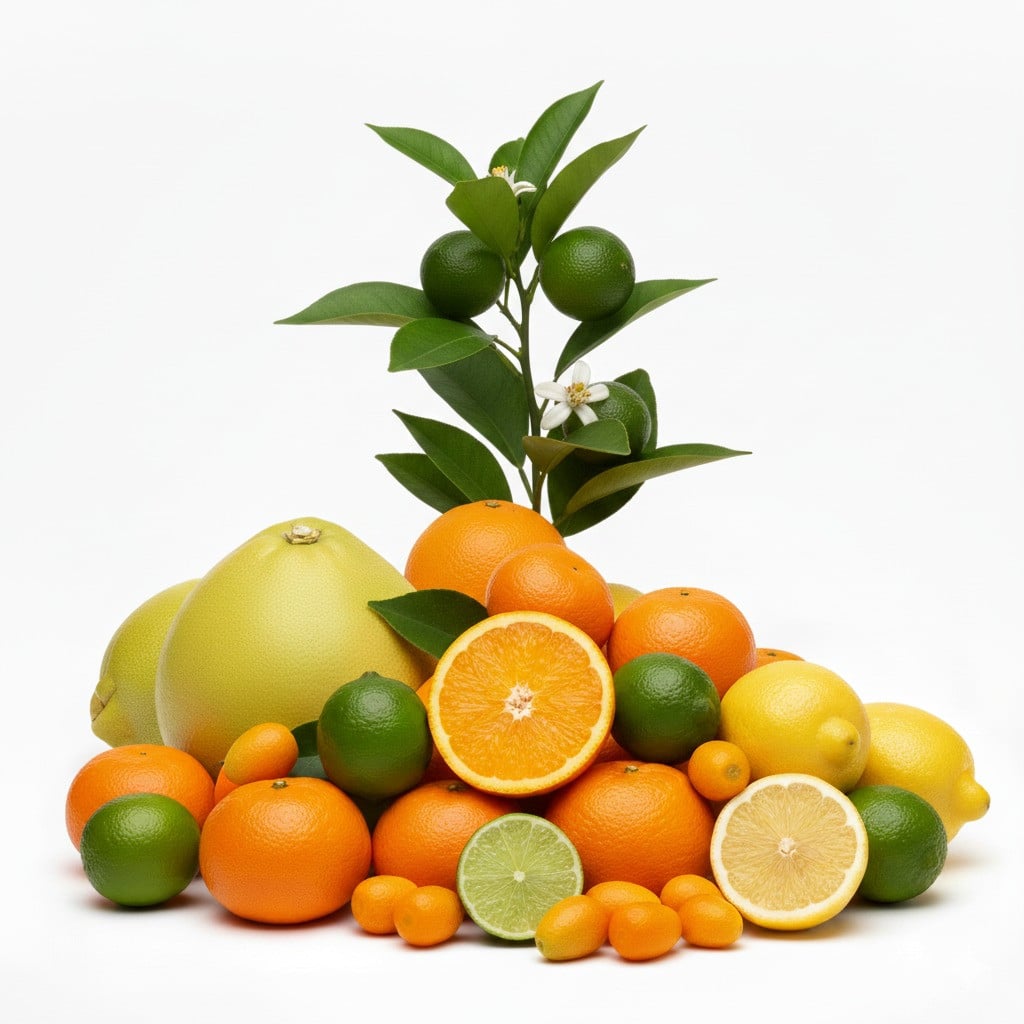
Citrus plants
Citrus
Plant family
Rue family (Rutaceae)
Season Overview
Propagating
Planting
Harvest
J
F
M
A
M
J
J
A
S
O
N
D
1ST YEAR
FOLLOWING YEARS
Details


Light requirement
Sunny

Water requirement
Moist

Soil
Medium (loamy)

Nutrient requirement
Medium

Dark germinator

Germination temperature
20 – 25 °C (Degrees Celsius)

Plant distance
400 cm

Row spacing
400 cm

Seeding depth
1.5 cm
Instructions
Description
Origin The genus of citrus plants (Citrus) belongs to the rue family (Rutaceae). There are around 13 species, although it is not easy to clearly differentiate between them, as citrus plants have been cultivated for thousands of years and cross-breeding between all species is possible. As a result, there are numerous hybrid varieties that were previously regarded as independent species. However, the diversity of today's citrus plants can probably be traced back to just three species, namely the citron (Citrus medica), the mandarin tree (Citrus reticulata) and the pomelo tree (Citrus maxima). The original distribution area of the various citrus species is in the tropical and subtropical regions of South East Asia. There is evidence that mandarins (Citrus reticulata), kumquats (Citrus japonica) and grapefruits were already being used as cultivated plants in China in 800 BC. At the same time, lemons and citrons were known in India. The first citrus plants probably reached Greece via Persia in the fourth century BC. From there, these and later other species and varieties gradually spread throughout the Mediterranean region. Appearance and growth Citrus plants are perennial, woody plants that grow like shrubs or trees. Depending on the species, they can grow between 5 and 25 meters high and are evergreen. Typically, the young branches are green and angular, while older branches become rounded and their bark takes on a grey color. The shoots can be covered with thorns. The alternate, dark green leaves are leathery and oval to elongated in shape. Some species, such as the kaffir lime (Citrus hystrix), have widened and winged leaf stalks. The hermaphrodite, white or pink flowers are usually arranged in clusters, rarely in terminal flower clusters. They are fragrant and release an aromatic oil. The flowers of the orange tree (Citrus x sinensis) and the bitter orange (Citrus x aurantium) are steam distilled to extract the so-called neroli oil, which is used in perfume production, for example. The flowering period usually begins at the end of the cooler season. The species cultivated here as potted plants flower at different times, depending on the amount of fruit and the overwintering conditions. The plants only produce new flowers when the existing fruit has been harvested. Lemon trees (Citrus limon) are an exception, as they can flower and fruit all year round. The fruits of citrus plants, which vary greatly in shape depending on the species and variety, are botanically classified as berries. They are generally spherical to elongated, their ends are bluntly round or have a protruding tip. Buddha's hand is a curious exception. The skin is yellow, greenish or orange in color and contains numerous oil glands. The inside of the fruit consists of eight to twelve segments filled with sap tubes. There are 10 to 40 seeds in the fruit. However, many cultivated varieties are now seedless. Aromatic scents Almost all citrus plants contain plenty of essential oils in all parts of the plant. If the sun evaporates the oils contained in the leaves in summer, they become particularly fragrant. Each species has its own unique aroma. Lemon leaves smell fresh and fruity, mandarin leaves sweet and tart and orange leaves sweet. Citrus blossoms also exude pleasant, mostly sweet fragrances, as do the fruit peels, whose perfume varies greatly depending on the species. Compact growth Most citrus plants have a beautiful closed growth habit. Regular pruning encourages the spherical crowns. Mandarins, kumquats, calamondins and oranges grow particularly densely. Lemons and citrons, on the other hand, grow more sprawling and thinner. The tree shape is created by grafting onto a rootstock. The height of the grafting point determines the base of the crown. Citrus plants can also be grown on a trellis.
Origin:
tropical and subtropical regions of Southeast Asia, China, India, Persia, Greece, entire Mediterranean region
Growing tips
Location and substrate Citrus plants are considered character species for Mediterranean garden design, as they embody the Mediterranean way of life like almost no other plant species. As early as the Baroque period, these trees and shrubs were collected and cultivated in special orangeries by garden-loving princes. They could thrive all year round in the mostly unheated, south-facing glass houses. The numerous species and varieties are still enthusiastically cultivated as potted plants today. They can (and should) be kept outdoors during the frost-free period, i.e. from around April/mid-October/November. Citrus plants need a sunny location, but the root ball must not overheat. This happens when a dark planter is left in full sun for hours on end. The soil heats up and the roots then restrict their activity - in other words, they do not absorb enough water to compensate for evaporation through the leaves, even if there is sufficient moisture. The result is wilting. When frost sets in, citrus plants must be moved to winter quarters. A bright, frost-free conservatory is also suitable as a year-round location. Low-growing citrus plants such as the bitter orange (Citrus aurantium var. myrtifolia) can thrive on the windowsill all year round, but the location is not ideal. The exotic fruits of the various species are all edible, but in the case of plants cultivated as container plants, they are mainly ornamental. The leaves of the kaffir lime are suitable as a spice for Thai dishes. Pure peat soil is unsuitable as a planting substrate for citrus plants. Ideally, about a third of the substrate should consist of mineral additives such as lava pieces, crushed limestone, expanded clay or grit, gravel and coarse sand. Although ready-made citrus plant soil is available commercially, you should take a close look at its composition and prepare it accordingly if necessary. Planting Before planting, carefully loosen the root ball with your fingers and shake off the old soil. When planting in the pot, make sure that any grafting points are not covered with soil. Finally, water the citrus plants thoroughly. Care tips for citrus plants Most citrus plants originate from the ever-moist monsoon regions, so they should always be provided with a constant supply of water during the growing season. However, this can easily lead to care errors with citrus plants. It is therefore best to water them daily on sunny days. However, the plants do not tolerate waterlogging. In winter, one watering a month is usually sufficient if the plant is kept almost frost-free during the winter. The widespread recommendation to use low-lime water or rainwater for watering can no longer be confirmed. One study found that the calcium requirement of citrus plants is actually quite high. It is therefore best to water with medium-hard tap water. Citrus plants need a lot of nutrients during the growing season. You should start fertilizing citrus plants at the beginning of budding in spring, i.e. from around March. Either apply a liquid fertilizer once or twice a week or provide your plants with a slow-release fertilizer. The following nutrient composition is given for the optimum citrus fertilizer (based on approximately one liter of fertilizer): 10 grams of nitrogen (N), 1 gram of phosphate (P205), 8 grams of potassium (K2O), 1 gram of magnesium (MgO) and 7 grams of calcium (CaO). To cover the calcium requirements of your citrus plants, fertilize additionally with calcium nitrate (available from agricultural suppliers) dissolved in water. Important: Under favorable conditions, for example in a conservatory, citrus plants grow all year round. In such cases, they also need occasional fertilizer in winter. Otherwise, stop fertilizing in October. Citrus plants are repotted when the soil is completely saturated with fine roots. The new plant container should only be slightly larger than the previous one. A suitable time for repotting is March or April, i.e. before the plant sprouts. In late fall and winter, i.e. when the plant is dormant, it should not be repotted as citrus plants do not develop new roots during this time and this can cause damage to the existing root system. Regular pruning keeps citrus plants, which tend to grow sparsely and irregularly, compact. A lemon tree should also be pruned occasionally. The branches are shortened during the summer if they become too long. If larger crown corrections are required, choose late winter for this, i.e. just before the citrus plants sprout. It is best to prune citrus plants frequently, but only a little, because if you only remove the shoot tips and not half a fully developed branch, the plants lose hardly any strength. Pruning also stimulates branching and the crowns remain compact. Larger crown corrections are carried out in February and March. This pruning may be carried out into the old wood. The plants hardly grow at all during this time and are only slightly weakened by pruning. However, wounds larger than a one-euro coin should still be treated with tree wax around the edges as a precaution. As a general rule, always cut above the buds or leaves that point towards the outside of the crown. The new shoots then also point outwards and have room to branch out again. The cut should be made diagonally in the direction of growth of the bud or leaf and about two to three millimetres above it. Very densely branched and leafy crowns are problematic for the formation of fruit, as hardly any light or sunlight reaches them. The naturally very compact crowns of mandarins, clementines or kumquats should therefore be thinned out regularly, whereas lemon trees and citrons, which tend to grow more loosely, are less likely to need pruning. Dead and dry branches must be removed completely or shortened to healthy tissue, as only living branches can heal. Citrus plants often sprout below the grafting point; you can either break out such shoots or cut them off directly at the trunk with scissors. Overwintering citrus plants Citrus plants need a frost-free but cool place to overwinter. Depending on the species, the temperature should be between 3 and 15 degrees Celsius. The warmer the room, the brighter it needs to be. In a dark location, the plants shed some of their leaves, but they usually sprout again in spring. Watering should be reduced during the winter. The soil must not become waterlogged, but should not dry out either. Make sure that the soil is moist enough so that the roots at the bottom of the pot are also supplied with water. Citrus plants react very sensitively if the exotic potted plants are placed on a cold stone or tiled floor in their winter quarters - they then usually turn yellow within a very short time. In such cases, place the pots on a wooden board or a piece of polystyrene. Propagating citrus plants Citrus plants can be grown from seed. They need a bright and sunny location to germinate. However, plants grown in this way only flower and bear fruit after many years. For the hobby gardener, growing new plants is therefore hardly worthwhile. The commercially available cultivars are usually grafted, i.e. a shoot of a particular cultivar is grafted onto a rootstock. The trifoliate lemon (Poncirus trifoliata) or the bitter orange (Citrus aurantium) is very often used as a rootstock. Diseases and pests Infestation with pests on citrus plants is often a sign that the location or care is not optimal and the plants are therefore stressed. During the summer, spider mites and, in winter, scale insects in particular can become a problem. The latter can be combated with a solution of white spirit and soft soap. Appropriate preparations from specialist retailers help against spider mites. Covering the entire plant with a large plastic bag increases the humidity and reduces the vitality of the spider mites.

Companion Plants

Antagonistic Plants

Diseases
Root Rot

Pests
Mealybugs
Aphids
Schildläuse
Spider mites