Turnips - Wild turnips

Turnips - Wild turnips
Brassica rapa subsp. campestris
Plant family
Crucifers (Brassicaceae)
Cultivation Break
4 Years
Season Overview
Sowing
Harvest
Harvest
J
F
M
A
M
J
J
A
S
O
N
D
1ST YEAR
2ND YEAR
Details


Light requirement
Sunny

Water requirement
Moist

Soil
Medium (loamy)
Nutrient requirement
Medium

Dark germinator

Germination temperature
12 - 20 °C (Degrees Celsius)

Plant distance
15 cm

Row spacing
30 cm

Seeding depth
1.5 cm
Instructions
Description
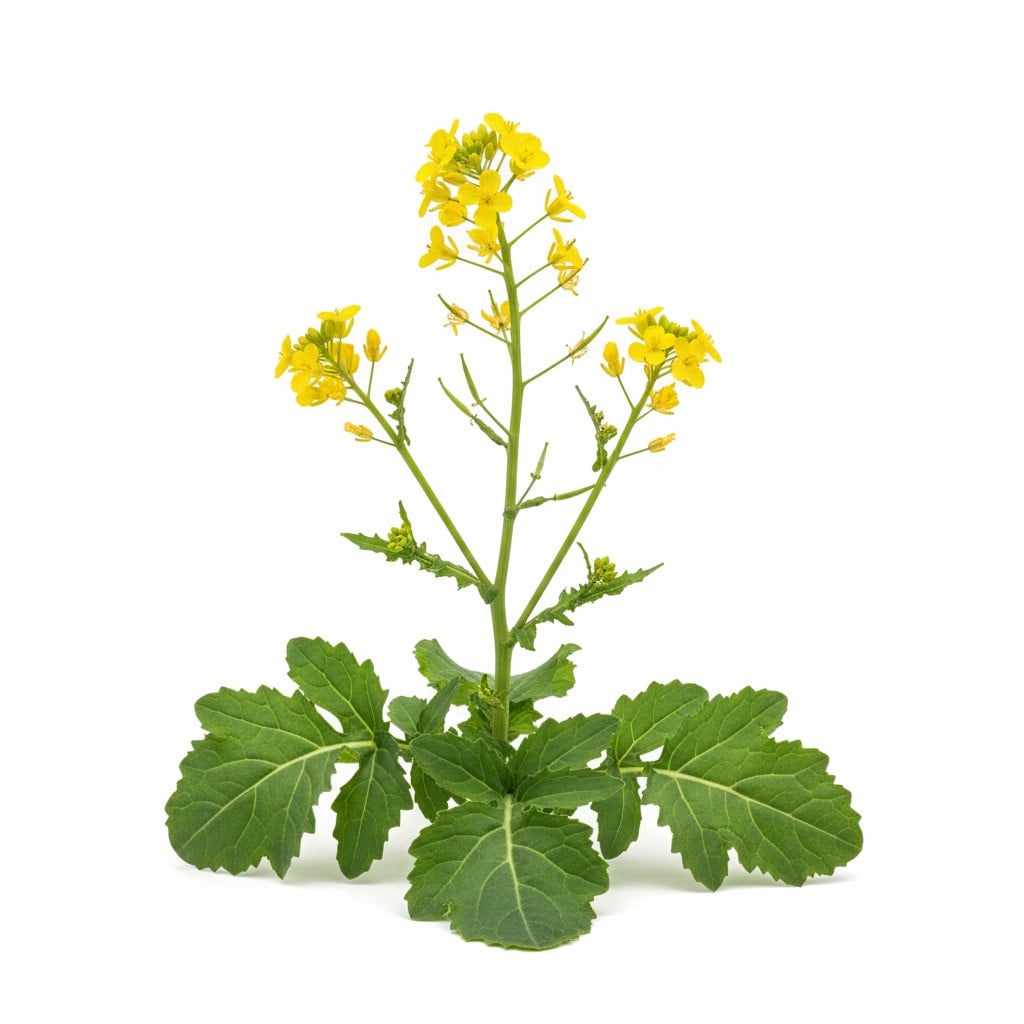
Origin and classification Brassica rapa, known as turnip rape, turnip cabbage or turnip seed, is a plant species from the cruciferous family (Brassicaceae) and belongs to the genus Brassica. This versatile herbaceous annual or biennial plant originally comes from Eurasia, but has been cultivated worldwide as a fodder and vegetable plant. It was already cultivated in ancient times for its nutritious leaves and roots. In the wild, it is often found on fresh and nutrient-rich soils of meadows, fields and roadsides. Turnip rape has been cultivated since the Neolithic period and has developed into numerous subspecies thanks to human selection. In some of them, the taproot became the thick turnip, such as the turnip of May (Brassica rapa ssp. rapa var. majalis) or the turnip of Teltow (Brassica rapa ssp. rapa var. teltowiensis), while in others the leaves and their fleshy parts were preferred, such as Chinese cabbage (Brassica rapa ssp. pekinensis) or pak choi (Brassica rapa ssp. chinensis). The seeds, on the other hand, are used as oilseeds in oilseed rape (Brassica rapa ssp. oleifera). Brassica rapa is a herbaceous plant that can grow between 30 and 100 cm high, depending on the variety. The turnip has a strong and deep taproot. Above this rises the branched stem with lyre-shaped basal leaves and lanceolate stem leaves that completely enclose the stem in a heart shape at the base. They have blue-green stripes on the upper side and pure green on the underside and are unevenly toothed, strongly crenate or smooth at the edges. The typical yellow flowers appear in spring to summer. The terminal inflorescences are initially umbrella racemes, which constantly sprout further typically four-petaled and cross-shaped flowers at the top and develop into an elongated raceme. In contrast to the similar rapeseed, the open flowers tower far above the buds. The sepals are upright and protruding and 6-8 millimetres long, the golden-yellow petals 7-11 millimetres long, the flower stalk is always considerably longer than the flower itself. The fruits are pods with oil-rich seeds. Uses Turnip rape is an excellent bee pasture and is mainly pollinated by honey bees and wild bees. Like rapeseed, it is one of the favorite food plants of the cabbage white butterfly. 15 Wild bees collect the pollen from the flowers, especially sand bees and mason bees. Turnip rape is not poisonous and can be used as a food plant for animals and in human nutrition. The young leaves are suitable as a salad or vegetable, while the roots can be eaten in cooked or raw form. In the home kitchen, it is often used for cooking soups and stews.
Origin:
Eurasia, Central Asia, Mediterranean region
Growing tips
Cultivation Turnips are undemanding plants that are easy to cultivate in the garden. They prefer sunny to semi-shady locations and thrive in almost any soil as long as it is not too compacted. They grow particularly well in humusy, well-drained loamy soil with sufficient moisture. - Sowing: Direct sowing outdoors from March to September - Soil: Loose, rich in humus, moist but not waterlogged - Water requirement: Moderate, but water regularly - Fertilization: Organic fertilizer or compost to support growth Turnip rape can be used as a catch crop for green manure. Its root formation makes it suitable for loosening the soil. However, humus formation and root penetration is lower than with mustard and oil radish. It goes well with beans, peas, potatoes, sunflowers and lettuce. Pruning Turnip rape only requires pruning to remove wilted and withered shoots. Propagation Propagation is mainly by sowing the seeds, which develop within a few weeks. As Brassica rapa is a biennial plant, seed formation only takes place in the second year after flowering. Diseases and pests Typical diseases and pests that can affect turnips are - Cabbage hernia: A fungal disease that leads to root thickening - Aphids: Young plants are particularly susceptible - Earth fleas: Cause feeding damage to the leaves - Slugs and snails: Prefer to eat young leaves

Companion Plants
Barley
Bean ((Scarlet) runner bean)
Bean (Broad bean / Faba bean / Field bean)
Bean (Dwarf bean)
Bean (Hyacinth bean / Lablab-bean)
Bean (Lima Bean)
Bean (Runner bean)
Chives
Coriander / Cilantro
Dill
Garlic
Leeks
Lettuce (Common chicory)
Lettuce (Endive / Escarole / Erisée)
Lettuce (Lamb's lettuce)
Lettuce (Lettuce)
Lettuce (Puntarelle / Cicoria di catalogna / Cicoria asparago)
Lettuce (Radicchio / Italian chicory)
Lettuce (Sugar loaf)
Lupine / Bluebonnet
Oats
Onion
Onion (Spring onion)
Pea
Rye
Soybean
Spinach (Summer)
Spinach (Winter)
Sunflower
Sweet lupins

Antagonistic Plants
Abyssinian cabbage / Ethiopian mustard
Aubergine / Eggplant
Broccoli
Broccoli raab / Stem cabbage / Cima di rapa
Brussels sprouts
Brussels sprouts
Cabbage (Cabbage)
Cabbage (Pointed cabbage)
Cabbage (red cabbage)
Cabbage (Savoy cabbage)
Cauliflower
Chinese kale - Kai-lan / Chinese broccoli
Collard greens
Collard greens (Kale)
Collard greens (Tuscan kale / Dinosaur kale / Palm tree kale)
Fennel
Florence fennel / Finocchio
Kohlrabi / German turnip / Turnip cabbage
Napa cabbage / Chinese cabbage
Okra
Pepper / Paprika
Radish
Radishes
Rapeseed
Rapeseed - Sheer cabbage / Siberian cabbage
Rutabaga / Swedish turnip
Sea coal
Tomato (Bush tomato)
Tomato (Cocktail bush tomato)
Tomato (Cocktail Stake Tomato)
Tomato (Stake tomato)
Vegetable cabbage - Forage cabbage
Vegetable cabbage - Ribbed cabbage / Portuguese cabbage
Vegetable cabbage - wild cabbage / ancient cabbage
Diseases
Root Rot
Club root of cabbage
Angular leaf spot of cucumber
Powdery mildews
Pests
Land snails
Stem borers
Nematodes
Leaf-miner flies
Flea beetles
Aphids