Garden squash - Patisson / UFO squash

Garden squash - Patisson / UFO squash
Cucurbita pepo var. patissoniana
Plant family
Curcurbits (Cucurbitaceae)
Cultivation Break
3 Years
Season Overview
Propagating
Planting
Harvest
J
F
M
A
M
J
J
A
S
O
N
D
Details


Light requirement
Sunny

Water requirement
Moist

Soil
Medium (loamy)

Nutrient requirement
High

Dark germinator

Germination temperature
20 - 24 °C (Degrees Celsius)

Plant distance
80 cm

Row spacing
100 cm

Seeding depth
2.5 cm
Instructions
Description
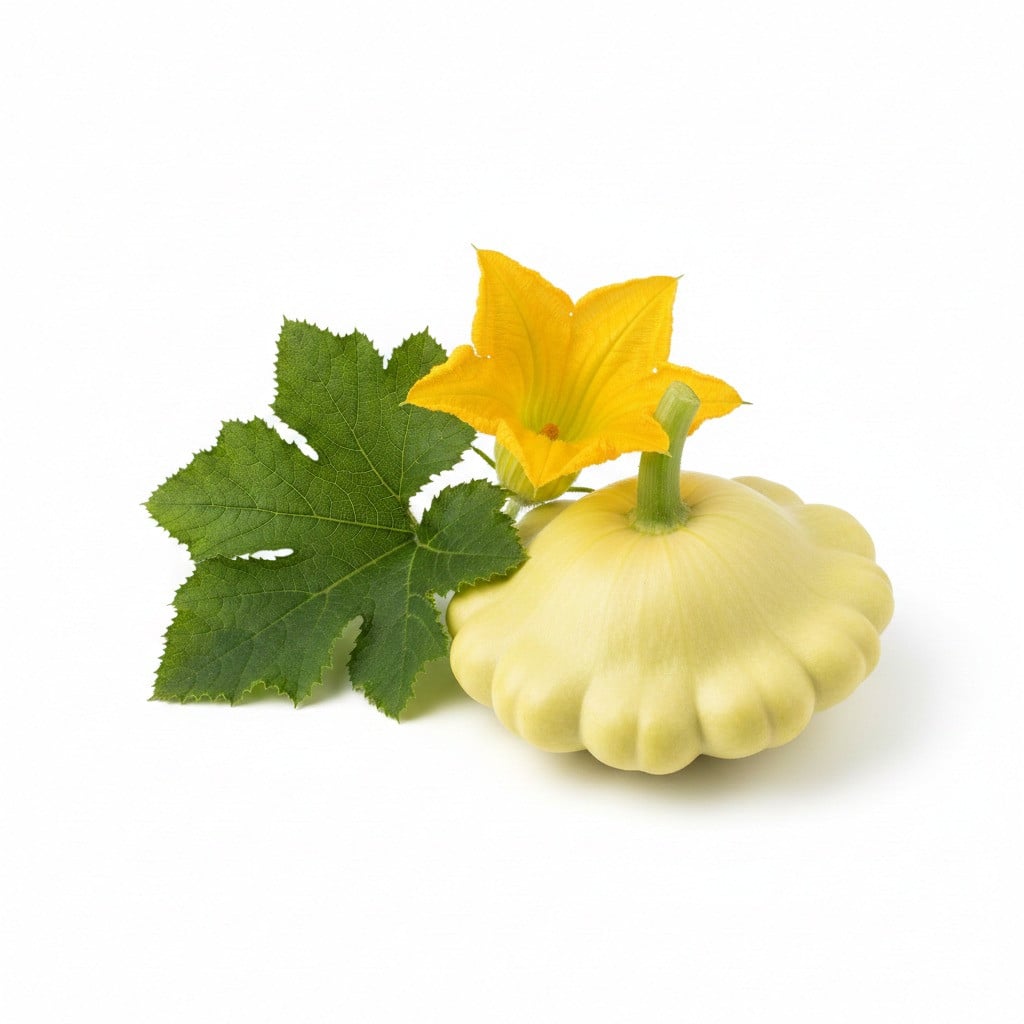
The patisson squash is called differently from region to region. The name patisson comes from France, for example, while in the USA and Canada it is often known as "pattypan". This reflects the cultural diversity and the different culinary traditions in which this pumpkin is appreciated. Compared to round or oblong pumpkins, the patisson is flat and has a round, often jagged shape reminiscent of a flying saucer, which is why it is nicknamed the "UFO pumpkin". This unique appearance makes it particularly easy to recognize. It is also usually smaller (10-25 cm in diameter) than many other pumpkin varieties, often as big as the palm of your hand, although there are also larger specimens. The patisson varies greatly in color, from white to yellow to various shades of green, while some varieties are also spotted or multicolored. Unlike classic edible pumpkins such as the Hokkaido or Butternut, its skin is relatively smooth and edible in young specimens. Health benefits: Patisson squash is a light, nutrient-rich vegetable that contributes to overall health and can be easily integrated into a balanced diet. It is low in calories and high in fiber with a high water content and aids digestion, keeps you full for a long time and, like almost all pumpkins, is good for diabetes. The patisson contains many important vitamins, especially vitamin C and vitamin A. Vitamin C strengthens the immune system, while vitamin A is good for the eyes and skin. What does the patisson squash taste like? Patisson squash has a mild, slightly nutty taste with a subtle sweetness. Its aroma is somewhat reminiscent of zucchinis or artichokes, but is somewhat stronger. Young patissons are more tender and can be eaten with the skin on, while larger ones are firmer and have a more intense flavor. Overall, the patisson is versatile and goes well with light, hearty dishes. What is the best way to prepare patisson squash? Patissons offer a wide range of preparation options. You can cut it into thin slices or cubes and fry, grill, bake or stuff it. Alternatively, it is ideal for making soups and can even be pickled to create a unique side dish. As the skin is edible in young specimens, there is often no need to peel them - practical and delicious! - Baked or stuffed: Cut the patisson in half, hollow it out and fill it with a filling of your choice (e.g. rice, minced meat, vegetables or quinoa). Then bake in the oven until tender. - Steamed or fried: Young patissons can be sliced and pan-fried or steamed with a little oil or butter. They are an excellent accompaniment to meat or fish dishes. - Raw: Smaller, young patissons can also be used raw in salads. Their mild flavor and crunchy texture go well with fresh herbs and light dressings. - Pickled: Patissons can also be pickled like cucumbers. Cut into slices and pickle in a mixture of vinegar, water, sugar and spices - perfect as a side dish or snack. - In soups or stews: The pumpkin can be cut into cubes and added to soups or stews. Its mild aroma goes well with other autumn vegetables and spices such as garlic, thyme or nutmeg. The flowers are also edible and can be deep-fried in batter or used for decoration, for example. What is the best way to store patisson squash? Patisson squash is best stored in a cool, dry and well-ventilated place. The ideal temperature is between 10 and 15 degrees Celsius, for example in a cellar or pantry. Under these conditions, the pumpkin can keep for several weeks. If the patisson has already been cut, it should be stored in the fridge, wrapped in cling film or an airtight container to protect it from drying out. It will then keep for around 3 to 5 days. It is important not to store the pumpkin at room temperature or in direct sunlight, as it will spoil more quickly.
Origin:
Central, South America
Growing tips
🌞 1. location - Full sun, warm, sheltered from the wind - Optimal: loose, humus-rich soil - pH value: slightly acidic to neutral (6.0-7.0) 🌱 2. sowing & planting - Pre-cultivation: from mid-April indoors - Direct sowing: from mid-May (frost-free) - Sowing depth: 2-3 cm - Germination temperature: 20-24 °C - Planting distance: 80-100 cm (patisson remains more compact than zucchinis, but needs space) 💧 3. care - Keep evenly moist, but avoid waterlogging - Mulching (straw, grass clippings) retains moisture and protects fruit - Fertilize regularly: Compost + nettle manure - Do not usually remove side shoots - patisson grows bushy, not climbing 🌼 4. pollination - Like zucchini: separate male & female flowers - In bad weather, hand pollination if necessary (brush or male flower) 🎃 5. harvest - Harvest young (8-12 cm) → tender, edible skin - Larger fruits are firmer but more aromatic - Regular harvesting promotes new flowers 🛡️ 6. Diseases & pests - Mildew: keep in an airy position, do not water over the leaves - Slugs and snails: especially on young plants - Pumpkin fly rare, but possible → crop protection net in the first few weeks ❄️ 7. Storage - Young fruit: a few days - Mature fruits: several weeks at 10-15 °C

Companion Plants
Bean ((Scarlet) runner bean)
Bean (Broad bean / Faba bean / Field bean)
Bean (Dwarf bean)
Bean (Hyacinth bean / Lablab-bean)
Bean (Lima Bean)
Bean (Runner bean)
Beetroot
Borage
Chickpea
Chives
Common marigold
Corn / Maize
Dill
Garlic
Garlic chives
Leeks
Lettuce (Common chicory)
Lettuce (Endive / Escarole / Erisée)
Lettuce (Lamb's lettuce)
Lettuce (Lettuce)
Lettuce (Radicchio / Italian chicory)
Lettuce (Sugar loaf)
Mint
Nasturtium
Onion
Onion (Spring onion)
Pea
Radishes
Soybean
Spinach (Summer)
Spinach (Winter)
Sweet pea
Wild garlic

Antagonistic Plants
Abyssinian cabbage / Ethiopian mustard
Aubergine / Eggplant
Broccoli
Broccoli raab / Stem cabbage / Cima di rapa
Brussels sprouts
Cabbage (Cabbage)
Cabbage (Pointed cabbage)
Cabbage (red cabbage)
Cabbage (Savoy cabbage)
Cauliflower
Chili
Chinese kale - Kai-lan / Chinese broccoli
Collard greens
Collard greens (Kale)
Collard greens (Tuscan kale / Dinosaur kale / Palm tree kale)
Courgette / Zucchini
Cucumber (African horned cucumber / Kiwano)
Cucumber (Caigua)
Cucumber (Melothria)
Cucumber / Gherkin
Fennel
Florence fennel / Finocchio
Kohlrabi / German turnip / Turnip cabbage
Melon (Sugar melon)
Melon (Watermelon)
Mizuna / Japanese mustard greens
Napa cabbage / Chinese cabbage
Okra
Ornamental pumpkin
Pak Choi
Pepper / Paprika
Potato
Pumpkin / Squash
Rapeseed
Rapeseed - Sheer cabbage / Siberian cabbage
Rapini / Broccoli rabe
Rutabaga / Swedish turnip
Sea coal
Sponge gourd / Egyptian cucumber / Vietnamese luffa
Tomato (Bush tomato)
Tomato (Cocktail bush tomato)
Tomato (Cocktail Stake Tomato)
Tomato (Stake tomato)
Turnip
Turnip greens - Choy Sum / Chinese flowering cabbage
Turnip greens - Mizuna
Turnip greens - Tatsoi
Turnips - Oilseed turnips
Turnips - Wild turnips
Vegetable cabbage - Forage cabbage
Vegetable cabbage - Ribbed cabbage / Portuguese cabbage
Vegetable cabbage - wild cabbage / ancient cabbage
Diseases
Root Rot
Septoria
Fusarium
Downy mildew
Powdery mildews

Pests
Spider mites
Land snails
Flea beetles
Leaf bugs
Aphids