Grass carnations

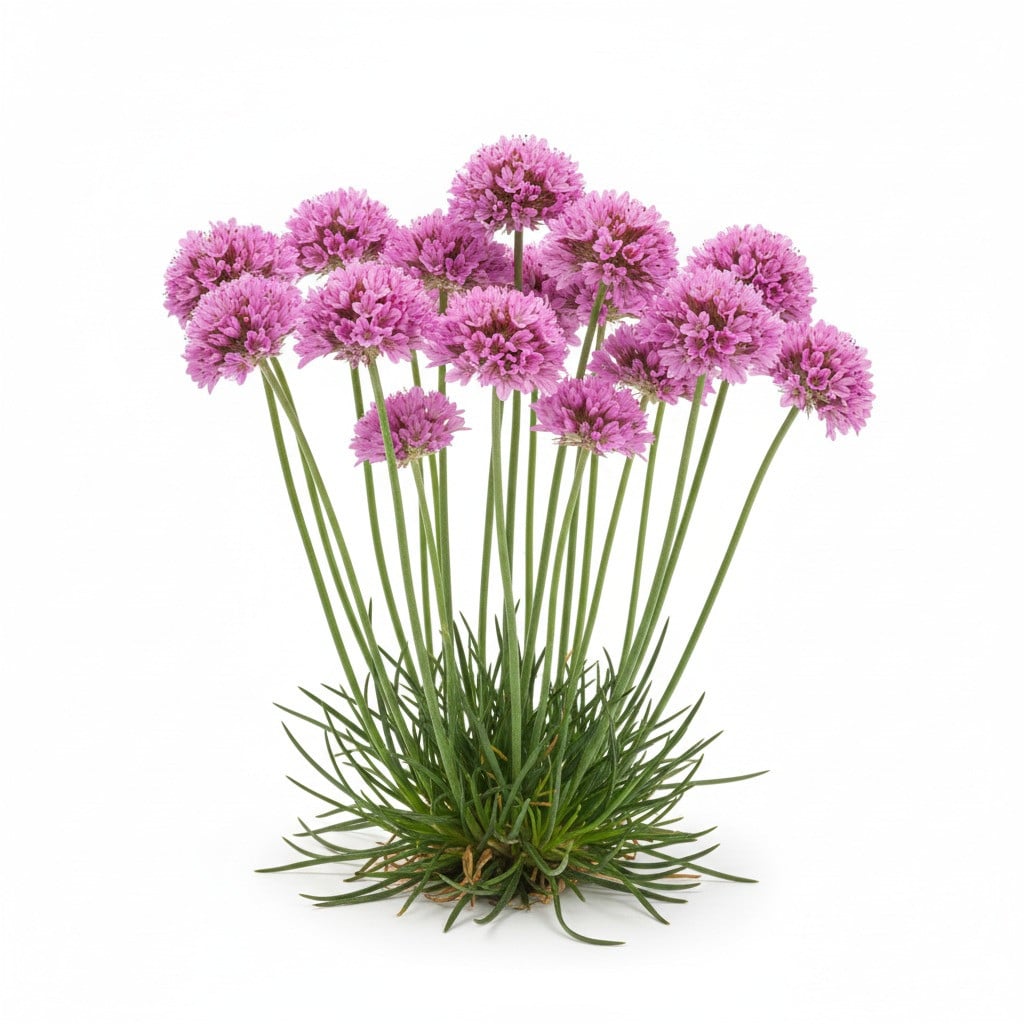
Grass carnations
Armeria
Plant family
Leadwort family (Plumbaginaceae)
Season Overview
Propagating
Planting
Harvest
Harvest
J
F
M
A
M
J
J
A
S
O
N
D
1ST YEAR
FOLLOWING YEARS
Details


Light requirement
Sunny

Water requirement
Dry

Soil
Light (sandy)

Nutrient requirement
Low

Light germinator

Germination temperature
15 - 20 °C (Degrees Celsius)

Plant distance
20 cm

Row spacing
25 cm

Seeding depth
0.5 cm
Instructions
Description
The genus Armeria belongs to the family Plumbaginaceae within the order Caryophyllales. Around 50 species are grouped in the genus Armeria. Carnations beautify many gardens with their bright white, pink or yellow flowers. The contrast between the delicate leaves and the ball-shaped flowers makes every gardener's heart beat faster. Carnations are robust, require little prior knowledge, brighten up any rock garden with their delicate appearance and adorn any vase as a cut flower. Representatives of the Armeria genus are undemanding perennials that enchant with lush blooms throughout the summer. Numerous insects enjoy the wide range of food on offer. The best-known species in this genus are the common carnation (Armeria maritima) and the alpine carnation (Armeria alpina). Leaf The foliage leaves of the grass carnations have no stems and are arranged in basal rosettes. The lamina (leaf blade) is simple and linear to linear-spatulate. Leaves are called linear if they are more than ten times as long as they are wide and have almost parallel edges. Leaves without a stalk, as in the case of carnations, are described as strap-shaped. Depending on the species, the leaves are narrower at their base, rarely straight, and have a smooth leaf edge. Flower Carnations have small five-petaled flowers in dense, spherical flower heads, which stand individually at the end of a long stem. The inflorescence stem (peduncle) is softly hairy or glabrous, rarely covered with wrinkles. At the upper end, tubular leaf sheaths surround the inflorescence stem. The inflorescences are terminal, hemispherical and capitate and consist of cymose partial inflorescences that stand together like coils and contain many individual flowers. Bracts with a parchment-like, dry skin surround each individual inflorescence. Carnations have a maximum of five individual flower stalks. Their flowers are hermaphrodite and have a double perianth. Plants of the genus Armeria have five sepals that grow together in a funnel shape and surround the growing and ripe fruit. The calyx tube of the grass carnations has ten ribs and downy hairs; more rarely they are glabrous. The tip of the calyx is membranous and with or without an awn. Carnations have five petals, which are fused at the base and vary in color from white to purple. The five free stamens are arranged in a circle and do not exceed the size of the plant's corolla. The stamens of the Armeria grow together with the petals at the base. Carnations have five free pistils, which have small hairs at the upper end and end in a smooth or papillose stigma. Depending on the species, there are two different types of flower in terms of pollen and stigma characteristics. Fruit The fruits of the grass carnations are dry, open transversely and contain a single seed. Growth Carnations are perennial, herbaceous and grass-like plants. They grow bushy in cushion-like shrubs and form taproots. Carnations reach a height of between ten and fifty centimetres and grow up to 30 centimetres wide. Armeria grow quickly and form beautiful carpets of flowers in a short space of time.
Origin:
in the temperate to cold regions of North America, in the south of South America, Europe western Asia, northern Africa, European Mediterranean region
Growing tips
Location In nature, Armeria colonize sandy, treeless locations such as salt marshes, dry grassland or stony ground and thrive even under extreme conditions. Due to their origin, carnations find optimal conditions in the garden in a full sun location. Planting in the shade or partial shade is not advisable. As they can tolerate a lot of sun and wind and are generally robust, carnations are ideal for planting in gardens near the coast. Armeria have no demands on the soil either, as long as it is permeable and not waterlogged. Adding coarse sand helps to make the dense soil in your garden more permeable and protect the plants from rotting. Carnations are frugal plants in terms of nutrients and thrive in almost any type of soil. They feel most at home on dry, stony and nutrient-poor substrates. Distribution The approximately 50 species of grass carnation are found in temperate to cold regions in North America, in the south of South America and in Europe. There are further occurrences in western Asia and northern Africa. The greatest diversity of species is found in the European Mediterranean region. Utilization The genus of grass carnations contains mainly wild-growing species. A few species are used as ornamental plants in gardens (Armeria alliacea, Armeria maritima, Armeria juniperifolia, Armeria leucocephala). Due to their low demands on the location and their vitality, they are very useful as ornamental plants in rock gardens or near the coast. The nectar of the plants magically attracts bees, which is why carnations make a major contribution to a bee-friendly garden. Both the leaves and the roots of Armeria maritima are edible when cooked. Care/pruning Carnations can be planted throughout the year from spring to fall. These beautiful flowers are hardy in our latitudes. It is advisable to ensure sufficient spacing between the perennials when planting. Carnations have a pronounced spreading habit and do not like to be planted too close together. Prolonged dry periods do not harm the carnations, making watering unnecessary in the hot and dry summer months. However, they are sensitive to waterlogging. Even after planting, the perennials need little water. Fertilizer is generally not necessary for carnations. They develop healthily without the addition of any fertilizer. However, they are happy to accept a light fertilization once at the beginning of the growing season with a complete fertilizer for perennials. It is not necessary to prune the perennials for carnations. Regularly cutting off wilted flowers extends the flowering period into the fall. It is advisable to remove the last flower heads in late fall. As carnations are completely hardy in Germany, they cope well with the winter cold and frost. In wet winters, waterlogging should be avoided. Diseases/pests If the soil is too poorly drained or too heavy, grass carnations will suffer from root rot. This fungus in the root area of the perennial is characterized by yellow, limp and drooping leaves and leads to reduced growth of the entire plant. When the grass carnations are dug up, soft, rotten roots become visible, causing the plant to die.

Companion Plants

Antagonistic Plants
Diseases
Angular leaf spot of cucumber
Root Rot

Pests
Spider mites
Land snails
Aphids