Rhododendron

Rhododendron
Rhododendron
Plant family
The Heath (Ericaceae)
Season Overview
Planting
Harvest
Harvest
J
F
M
A
M
J
J
A
S
O
N
D
1ST YEAR
FOLLOWING YEARS
Details


Light requirement
Semi-shaded

Water requirement
Moist

Soil
Medium (loamy)
Nutrient requirement
High

Plant distance
300 cm

Row spacing
300 cm

Seeding depth
0.5 cm
Instructions
Description
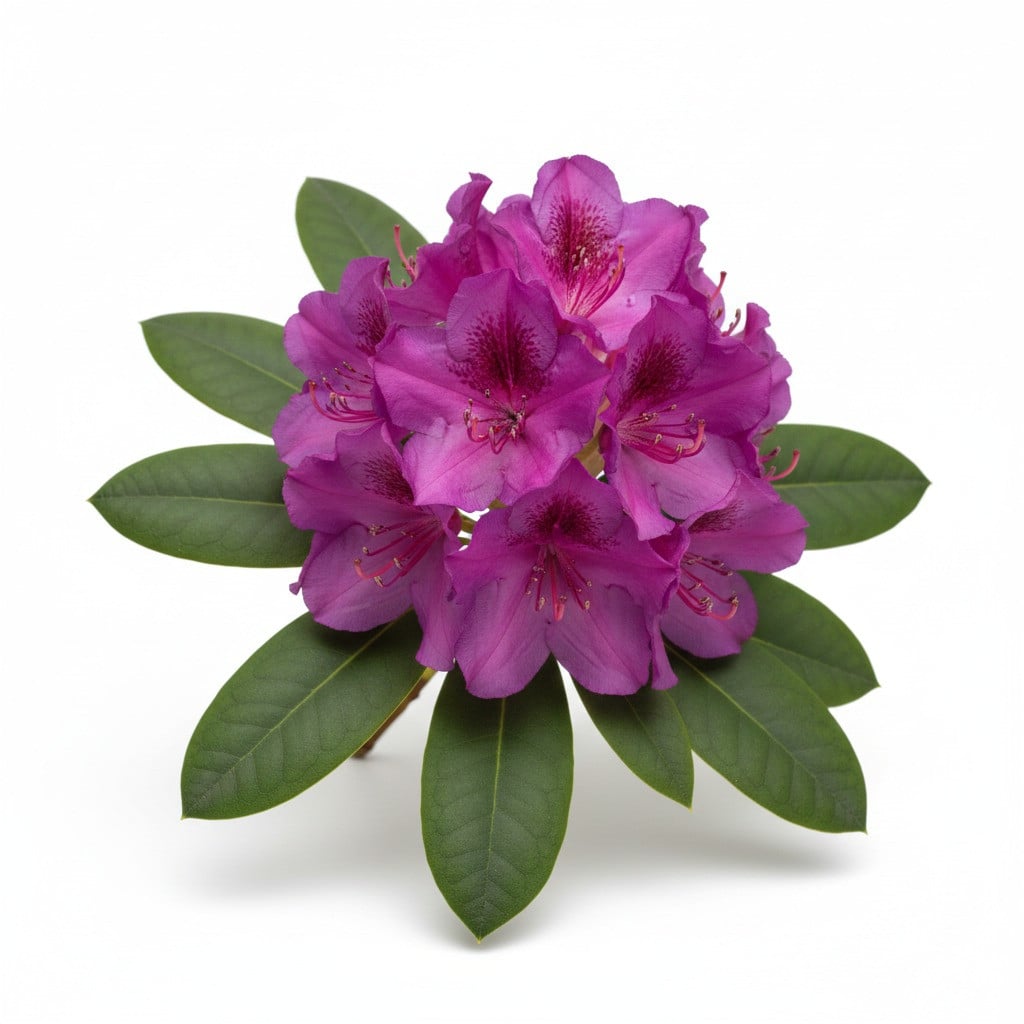
Rhododendron, also known as the Alpine rose, is undoubtedly one of the most important but most demanding flowering shrubs. The genus belongs to the heather family (Ericaceae) and consists of over 1,000 species, ranging from subarctic dwarf shrubs 15 centimeters high to trees 20 meters tall. Most of the species of interest to the garden come from East Asia. There they grow in species-rich deciduous or mixed forests on acidic, evenly moist raw humus soils. Two species are native to the German Alps: the rusty-leaved alpine rose (Rhododendron ferrugineum) and the bewimpered alpine rose (Rhododendron hirsutum). They are also found in other southern and eastern European mountains in light coniferous forests and shrubs on humus-rich soils. The numerous garden forms and hybrids from Asia are also often given the German name Alpenrose. The formerly separate genus of azaleas is now also included in the rhododendron family because of its close similarities. The botanical name Rhododendron comes from the Greek and literally means "rose tree". Appearance and growth A rhododendron usually grows quite slowly and usually has alternate leaves arranged radially around the branches. The foliage of the plant is mainly evergreen - rarely deciduous - and varies greatly depending on the species. Most have ovate to oblong, entire-edged leaves with often slightly downward-curved margins. When shooting, the leaves of some species are covered with a white, yellow or rust-red felt. It protects against sunburn and disappears during the summer. A deciduous azalea sometimes shows yellow-orange foliage in the fall. The range of flower colors is even wider for rhododendrons than for roses, as there are also blue flowering species such as Rhododendron impeditum. The terminal flower buds are formed the previous year and open in April and May in most species and varieties. One of the earliest rhododendrons is the early spring rhododendron (Rhododendron 'Praecox'), which presents its flowers in March before the foliage shoots. Some large-flowered hybrids such as 'Autumn Fire' or 'Autumn Joy' show a foretaste of their next year's flowering splendor at the end of the season.
Growing tips
Location and soil:

Companion Plants
No companion plants

Diseases
Septoria
Angular leaf spot of cucumber
Powdery mildews
Pests
Cicadas
Spider mites
Aphids