Make

Make
Pteridophyta
Plant family
Season Overview
Propagating
Planting
Harvest
Harvest
J
F
M
A
M
J
J
A
S
O
N
D
1ST YEAR
FOLLOWING YEARS
Details

Light requirement
Semi-shaded

Water requirement
Moist

Soil
Medium (loamy)
Nutrient requirement
Medium

Light germinator

Germination temperature
20 - 25 °C (Degrees Celsius)

Plant distance
60 cm

Row spacing
60 cm

Seeding depth
0.1 cm
Instructions
Description
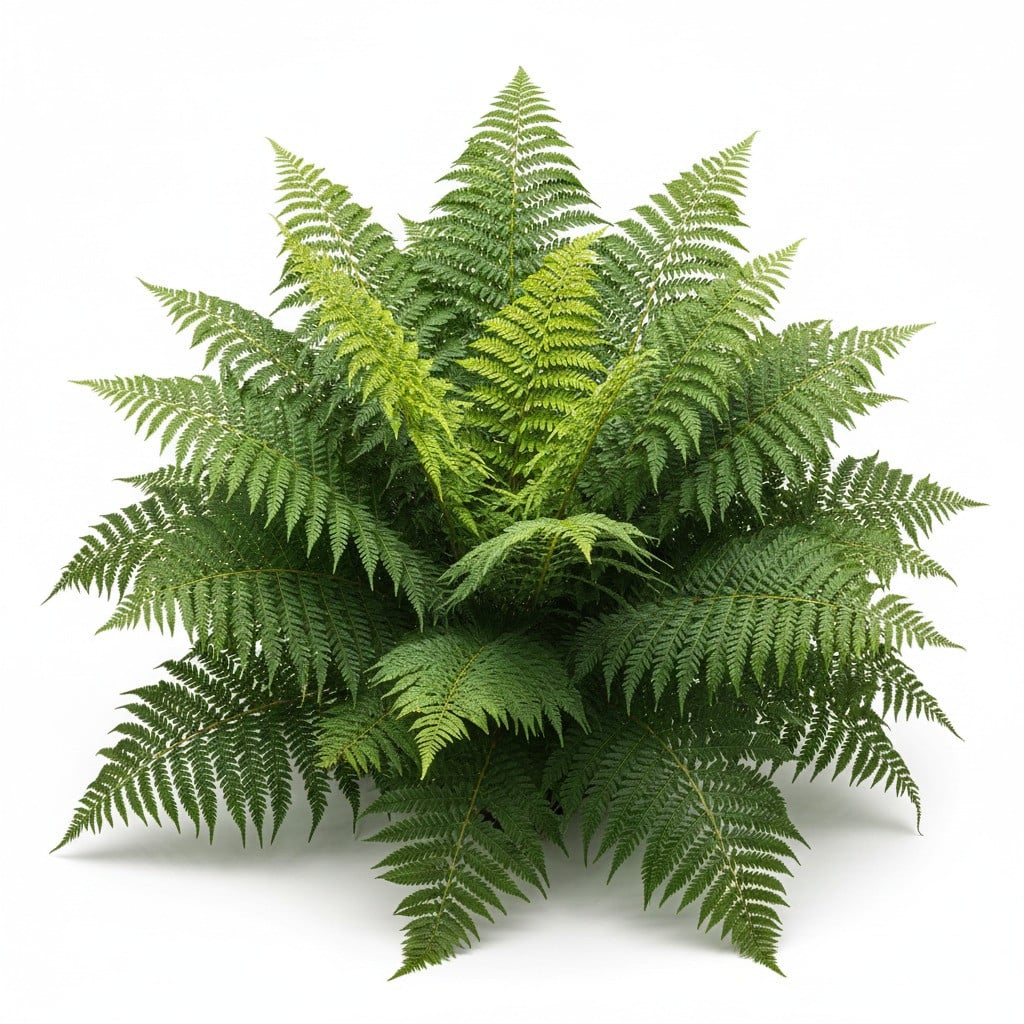
Anyone looking for attractive foliage plants for shady garden areas or an easy-care houseplant will find ferns hard to overlook. Ferns are quite literally the dinosaurs among green plants. Around 400 million years ago, giant tree ferns with their fronds formed dense forests and thrived alongside clubmosses and horsetails. Ferns are therefore not only one of the first plant species, but also one that has survived to this day. The remains of these great fern forests can now be found in the form of brown coal. In terms of evolutionary history, ferns represent the transition from non-flowering to flowering plants. Most of them are now extinct, but more than two hundred genera with approximately ten thousand species are still found worldwide. The largest specimens are found today in shady, warm, moist places, particularly in the tropics or subtropics, though ferns also thrive in cooler regions and present themselves as true stars of the shade border. Ferns grow herbaceously. Most specimens develop an extremely persistent rhizome that can survive for many decades. The characteristic fern fronds impress with their delicate form. Pinnae branch off sideways from the midrib. In their juvenile stage, these pinnae are rolled up and unfurl slowly in spring. The fronds of the many fern species and varieties vary widely in colour, form and leaf size. Their graceful growth and rich green make ferns first-class candidates for shady garden corners even without flowers. Evergreen species such as the hart's tongue fern adorn the garden even in the cold season. Although fern fronds do not sit on a stalk, branch or trunk like the leaves of flowering plants, they otherwise have all the characteristics of a true leaf: from the stalk runs a midrib, from which the so-called pinnae branch off almost symmetrically to the sides. Some species such as the maidenhair fern (Adiantum pedatum) and the northern spleenwort (Asplenium septentrionale) deviate from this. Otherwise this pattern varies in a thousand ways: some ferns have an extremely short stalk, others an excessively long one. The division of the blade, the pinnation, also comes in countless variations, whether singly, doubly or triply pinnate frond blades, or unpinnate as in the hart's tongue fern. Ferns are particularly fascinating during their spring emergence. The fronds for the following year are already formed in autumn. Rolled up and protected by so-called chaff scales, autumn leaves and old fronds, they survive the winter. At the start of the growing season, the fern fronds gradually unroll, resembling a bishop's crook or scroll in appearance. Unlike flowering plants, ferns do not produce flowers and seeds but spores. The spores are located and develop in spore containers called sporangia. These sit on the underside of the fern fronds and can be recognised as dots, dashes or specks. Fern fronds without sporangia are infertile (sterile). With a few exceptions, these two frond forms look virtually identical externally. There are, however, species in which the spore-bearing fronds differ markedly from the normal fronds, for example in the royal fern (Osmunda regalis) and the ostrich fern (Matteuccia struthiopteris).
Growing tips
Ferns are the perfect choice for shady garden areas. They like to grow in loose, humus-rich soil, like that found naturally in the forest. In the garden, you can imitate this litter layer effect by leaving autumn leaves lying around. As an additional layer of mulch, the leaves also provide natural winter protection and improve the soil.

Companion Plants

Antagonistic Plants
Diseases
Root Rot
Grey mold
Powdery mildews
Pests
Thrips
Spider mites
Schildläuse
Aphids