Pines

Pines
Pinus
Plant family
Pine family (Pinaceae)
Season Overview
Propagating
Planting
Harvest
J
F
M
A
M
J
J
A
S
O
N
D
1ST YEAR
FOLLOWING YEARS
Details


Light requirement
Sunny

Water requirement
Moist

Soil
Medium (loamy)
Nutrient requirement
Low

Light germinator

Germination temperature
15 – 20 °C (Degrees Celsius)

Plant distance
400 cm

Row spacing
600 cm

Seeding depth
0.2 cm
Instructions
Description
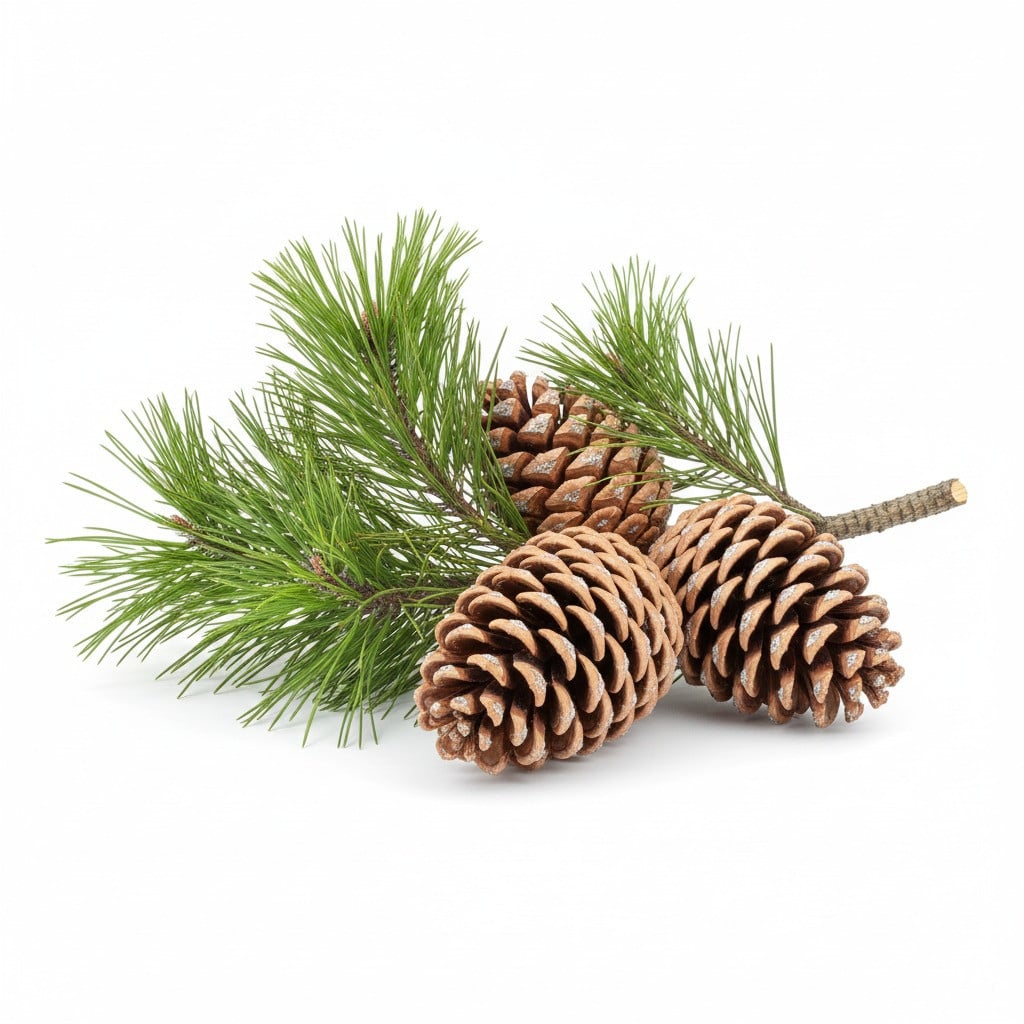
Pines (Pinus) are true survival artists: they grow on dunes, acidic moorland and in rock crevices. They can even survive in the Arctic Circle or in the Alps at an altitude of 2,500 meters. They would also thrive on nutritious, good soil, but here pines have too much competition from other trees, which compete with them for light. They are therefore found in nature in rather inhospitable locations. Of the more than one hundred pine species that exist in the world, the Scots pine (Pinus sylvestris), the stone pine (Pinus cembra) and the mountain pine (Pinus mugo) are native to Germany. As it grows older, the Scots pine develops into a picturesque tree with an umbrella-shaped crown. Due to its height of 40 meters, however, it is only suitable for parks and large gardens. It is also one of the most important trees for forestry in this country. The Swiss stone pine also grows very tall at 20 meters. The mountain pine remains much more compact, growing to a height of around six meters. There are also some compact varieties with flat, cushion-like or spherical growth. Asian pine species such as the maiden pine (Pinus parviflora) and the weeping pine (Pinus wallichiana) also have a high garden value. Appearance and growth As already mentioned, pines can have very different growth forms depending on the species or variety. The bark of the branches is often yellow to red-brown, the gray-brown bark of the trunk comes off in scales. As a by-product of forestry, the bark is also often used as so-called bark mulch in horticulture. As pine bark contains a lot of tannic acid, it suppresses weed growth particularly well. An unmistakable distinguishing feature, however, are the needles, which can be from 4 to over 20 centimetres long, depending on the species, and are arranged in a whorled pattern on the branches. The mountain pine has the shortest needles, the North American yellow pine (Pinus ponderosa) the longest. Depending on the pine species, the needles usually grow in twos, threes or fives on short, strongly compressed shoots. They are shed every two years or so and replaced by new ones. Pines are monoecious - that is, male and female flowers are on the same plant. The pollen is not carried by insects, but by the wind. On some spring days, usually in April or May, so much of it is released in the vicinity of pine forests that it becomes visible as a bright yellow coating on car roofs and in puddles. Only in the year following pollination do the usually quite large, broad-conical pine cones mature and fall from the tree. The more or less lignified scales contain hundreds of winged seeds that can be transported several kilometers by the wind.
Origin:
Found worldwide mainly North America, Europe, Asia
Growing tips
Location and soil Most pines are extremely frost-hardy, wind-resistant and heat-tolerant, but need a full-sun location. As far as the soil is concerned, however, the requirements are not particularly high: pines grow well even on poor, moderately dry sandy soils. They are also very tolerant when it comes to pH value, but with a few exceptions they do not tolerate high salt concentrations in the soil. Planting Pines are usually sold in pots in garden centers, larger specimens sometimes also come with a soil ball. As far as planting is concerned, both variants are completely unproblematic. However, the planting period for balled pines is limited to the growing season from around September to the beginning of April, whereas potted plants can be planted all year round - even in midsummer, provided you give the new pine a good supply of water in the first few weeks afterwards. No special soil preparation is necessary either - only very heavy, compacted soil should be loosened deeply and mixed with sand or humus. Always secure larger pines with a tree stake driven in at an angle against the main wind direction so that they cannot be blown over during the growth phase. Care tips Once rooted, all pines are extremely easy to care for and undemanding. They do not require fertilizer or additional watering. However, you can accelerate the growth of younger plants by adding compost in spring. If you live close to woodland, you should protect the trunks of some species, such as the Weymouth pine, with tight wire mesh or plastic game covers, as they are prone to browsing. Pruning Pines do not tolerate heavy pruning, as older, unpruned branches do not sprout again after shortening. However, so-called pruning, i.e. removing the lower branches directly from the trunk, is possible at any time and without any problems. Dwarf forms remain compact if the new shoots are regularly broken out. This maintenance measure is particularly important for garden bonsai. In Asia, pruning pine trees has been a tradition for centuries. The idea of bonsai is to imitate the picturesque growth of huge old trees in miniature. A lot of manual work is involved in shaping small-growing species by bending their branches and cutting the greenery like a cushion. To maintain the shape, the new shoots of the garden bonsai must be removed regularly. In May, when the so-called candles are still soft, they can simply be broken out by hand. Overwintering or winter protection The native pine species are completely frost-hardy. In southern Germany, however, pine trees (Pinus pinea), which originate from the Mediterranean region, can increasingly be seen in gardens. They only grow outdoors in very mild winter regions and must be well protected from frost damage. While the trees are still small, the crowns should be wrapped in winter fleece, the tree slices thickly mulched with autumn leaves and the trunks wrapped in jute. The weeping pine also needs a somewhat sheltered location. As a precaution, wrap young plants in draughty locations in the first few years in winter in fleece and mulch the tree slices with leaves. Propagation The wild species of pine can be propagated relatively easily by sowing. In order to harvest the seed, the cones of most species must be picked between September and October, just before the scales open. The cones that have fallen to the ground usually contain hardly any seeds. You can sow the seeds directly outdoors in March/April. Please note: The seeds of some species, such as the Scots pine or the dwarf pine, must be stratified before sowing. The garden forms are mainly propagated by grafting. In late summer, a flat, even slice of bark is removed from both the scion and the potted seedling and the rice is placed on the side of the rootstock in such a way that the two cuts, which should be as even as possible, are roughly congruent. This method is called lateral plating. The grafting point is usually only connected with a rubber band and not coated with tree wax. After grafting, the plants must be cultivated further in the greenhouse. Once the grafts have grown and the scions are sprouting vigorously, the rootstock is cut off above the grafting point. In the first winter, the young plants must be kept frost-free over winter and can then be transplanted outdoors in spring. Propagation by cuttings is possible with some weak-growing varieties of mountain pine. However, it is quite laborious and is usually only possible in a greenhouse with bottom heating and a spray mist system. In addition, the lower end of the shoot must be treated with special rooting hormones, which are not available to amateur gardeners. Diseases and pests Various fungal diseases can occur on pine trees, including needle blight, shoot dieback and pine rust. The different species are susceptible in different ways. The so-called pine shake, a sudden shedding of the needles, can have both fungal and physiological causes. Various pests also occur on the native Scots pine in particular, including leaf bugs, spider mites and various butterfly caterpillars. However, they do not usually cause any major damage.

Companion Plants

Antagonistic Plants
Aubergine / Eggplant
Broccoli raab / Stem cabbage / Cima di rapa
Brussels sprouts
Cabbage (Cabbage)
Cabbage (Pointed cabbage)
Cabbage (red cabbage)
Cabbage (Savoy cabbage)
Cauliflower
Chili
Collard greens (Kale)
Collard greens (Tuscan kale / Dinosaur kale / Palm tree kale)
Kohlrabi / German turnip / Turnip cabbage
Napa cabbage / Chinese cabbage
Okra
Pepper / Paprika
Tomato (Bush tomato)
Tomato (Cocktail bush tomato)
Tomato (Cocktail Stake Tomato)
Tomato (Stake tomato)
Diseases
No diseases
Pests
Leaf bugs
Spider mites
Caterpillars