sand herbs

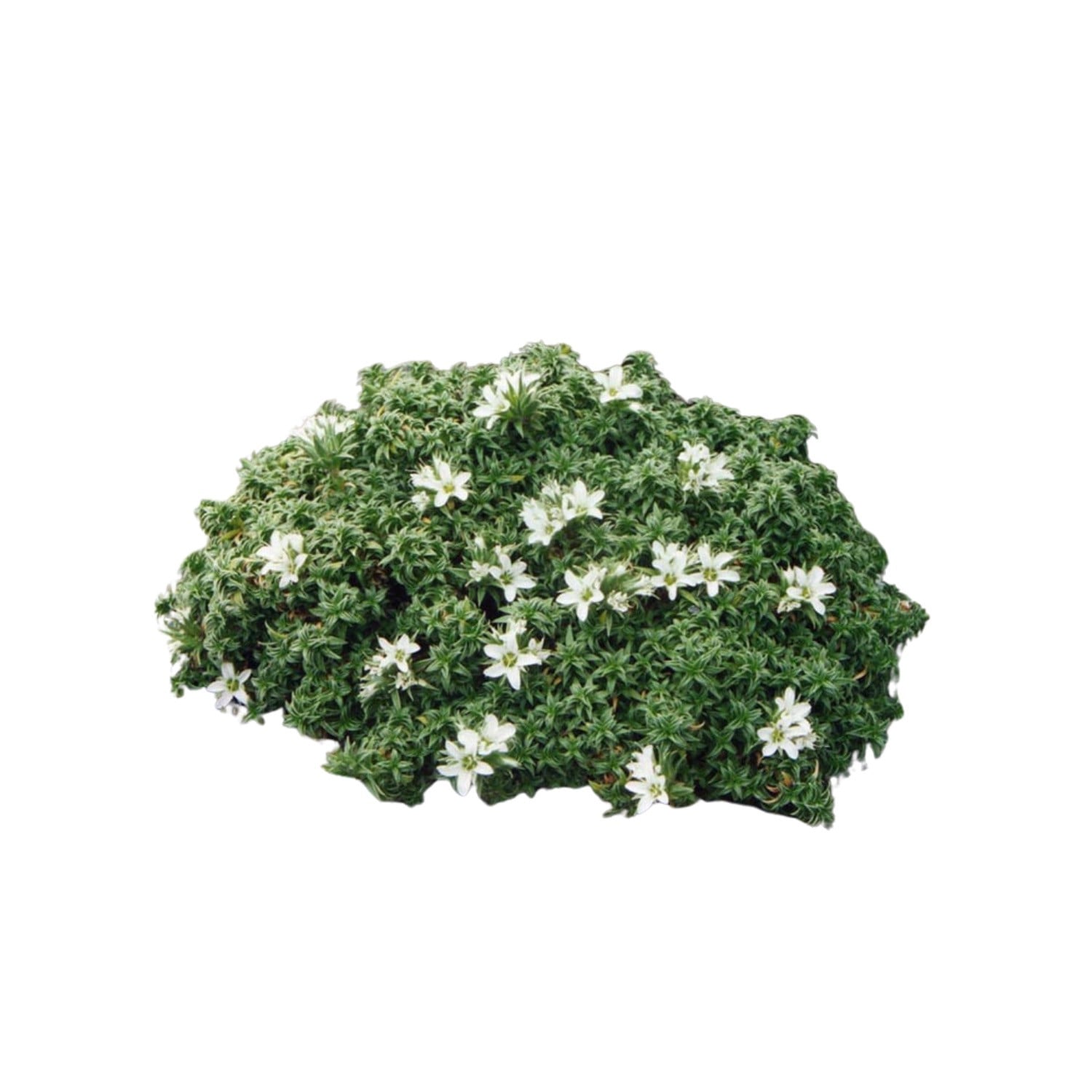
sand herbs
Arenaria
Plant family
Pink or Carnation family (Caryophyllaceae)
Season Overview
Propagating
Planting
Harvest
Harvest
J
F
M
A
M
J
J
A
S
O
N
D
1ST YEAR
FOLLOWING YEARS
Details


Light requirement
Sunny

Water requirement
Dry

Soil
Light (sandy)

Nutrient requirement
Low

Light germinator

Germination temperature
15 – 20 °C (Degrees Celsius)

Plant distance
30 cm

Row spacing
30 cm

Seeding depth
0.2 cm
Instructions
Description
Sandworts (bot. Arenaria) are a plant genus within the clove family (bot. Caryophyllaceae). The genus comprises between 150 and 300 species. As plants of the northern hemisphere, they should not be missing in any natural garden. They are considered robust herbaceous plants that can withstand harsh weather conditions. Sand herbs grow in the mountains, where they reach extreme altitudes. The herbaceous plants are adapted to the special habitats on sandy and dry soils. This makes them popular species for native stone gardens. In spring, these graceful plants delight garden owners with their multi-flowered splendor. Sand herbs adorn the garden with an abundance of flowers in shades of white. The green foliage adds a touch of color in winter. In the wild, sand herbs form a wonderful plant community together with three-fingered saxifrage (Saxifraga tridactylites) and compressed bluegrass (Poa compressa). These plants are adapted to habitats with extremely dry and warm conditions. Leaf Sand herbs form opposite leaves arranged on the stem axis. The simple leaf blade is undivided, the leaf edge is smooth. The shape of the leaves differs from species to species. The spectrum of leaf shapes ranges from lanceolate to rounded. Three to five veins are clearly visible on the leaf blades. Flower Sandworts bear single flowers that form the end of the stem axis or inflorescences with a few flowers. The flowers are small and radially symmetrical. They consist of a double perianth, which is four to five-petaled. The green sepals are free-standing and reach a length of up to five millimeters. They surround the delicate petals, which shine in shades of white. They are rounded at the tip, but not rimmed as in other species of the carnation family. There are some sandwort species that do not develop petals. In the center of the flowers are two circles, each with five free-standing stamens. They protrude clearly from the corolla and look particularly decorative in the delicate flower. Sandworts show their flowering splendor between May and July. Fruit Small capsule fruits develop after the flowering period. They burst open with six to ten short teeth and release their seeds. Each capsule contains between five and 35 seeds. They are colored in dark brown tones. The seeds are kidney-shaped to circular. Some seeds have narrow wings that facilitate dispersal by the wind. Growth Sandworts grow as herbaceous plants that appear as annuals to perennials. Some species form dense cushions that spread over the ground. There are representatives that grow as semi-shrubs. In these, parts of the shoot axis become woody. The plants survive the winter with the help of underground rhizomes. Distribution The sand herbs are mainly found in the northern hemisphere. Their range extends across the temperate and colder zones of the Holarctic. With 102 native species, China is at the top of the list. Almost 80 species are found exclusively in the Asian country. Nine species are native to North America. Some representatives conquer the high altitudes of the Andes and penetrate as far as Patagonia. Arenaria bryophylla is found on Mount Everest in the Himalayas. Here the plant grows at an enormous height of over 6,000 meters. It therefore belongs to the group of flowering plants with the highest altitude.
Origin:
temperate and colder zones of the Holarctic (Asia, China, Europe, North America, Andes)
Growing tips
Location Sand herbs love a full sun location. This is where the bright white flowers really come into their own. The plants feel at home in a semi-shady spot if this area offers light conditions. A calcareous and sandy soil supports lush growth. The plants like a well-drained substrate, as they are adapted to dry locations. Sand herbs find optimal growing conditions in dry beds. The delicate plants do not tolerate waterlogging. Utilization Sand herbs are the ideal plants for stony areas. The delicate flowers break up the color scheme of beige and brown tones. The cushion-forming species provide aesthetic accents. They bring the rock garden to life. The radiant flowers attract insects to the barren surroundings, further enriching the picture. Sand herbs are the ideal plants for greening roofs. Here they thrive magnificently in full sunlight. In small groups of three to five plants, the specimens do not interfere with each other. The plants also enrich their surroundings in pots. In pots, the specially adapted plants beautify balconies and terraces. The containers look perfect on walls and are beautiful and inviting in courtyard entrances. Care/pruning The plants are naturally adapted to particularly nutrient-poor locations. They do not need any additional fertilizer to grow. It merely supports the splendor of the flowers and extends the flowering period. In the first year, the young plants will enjoy an addition of organic or mineral fertilizer. After that, it is advisable to top up with fertilizer every two to three years. Compost or pond water are ideal fertilizers. Short dry periods do not cause any problems for the established plants. The plants' water requirements increase in midsummer. Additional watering with pond water or low-lime rainwater covers the increased need for liquid. Watering helps the plant to develop a deep and fine root system. The plants grow continuously and show their gratitude with lush blooms. The plants do not tolerate waterlogging. It damages the vitality of the plants. Pruning is not necessary. It is necessary to contain stands of plants if the cushions spread uncontrollably. Removing dead flower stalks supports a second flowering in the fall. Low plants do not need protection in winter. The evergreen plants defy icy winds and can withstand temperatures down to -20 °C. Diseases/pests Sandworts are susceptible to fungal diseases. In overly dense plant clusters, damp conditions prevail, which offer mold fungi optimal growth conditions. Waterlogging damages the roots. They rot in excessively wet conditions and provide an ideal breeding ground for fungal spores.

Companion Plants

Antagonistic Plants

Diseases
Root Rot

Pests
Spider mites
Aphids