Orchids - Marsh Orchids / Satyrion

Orchids - Marsh Orchids / Satyrion
Orchis
Plant family
Orchid family (Orchidaceae)
Cultivation Break
0 Years
Season Overview
Sowing
Harvest
Harvest
J
F
M
A
M
J
J
A
S
O
N
D
1ST YEAR
FOLLOWING YEARS
Details


Light requirement
Sunny

Water requirement
Dry

Soil
Medium (loamy)
Nutrient requirement
Low

Light germinator

Plant distance
20 cm

Row spacing
30 cm

Seeding depth
4 cm
Instructions
Description
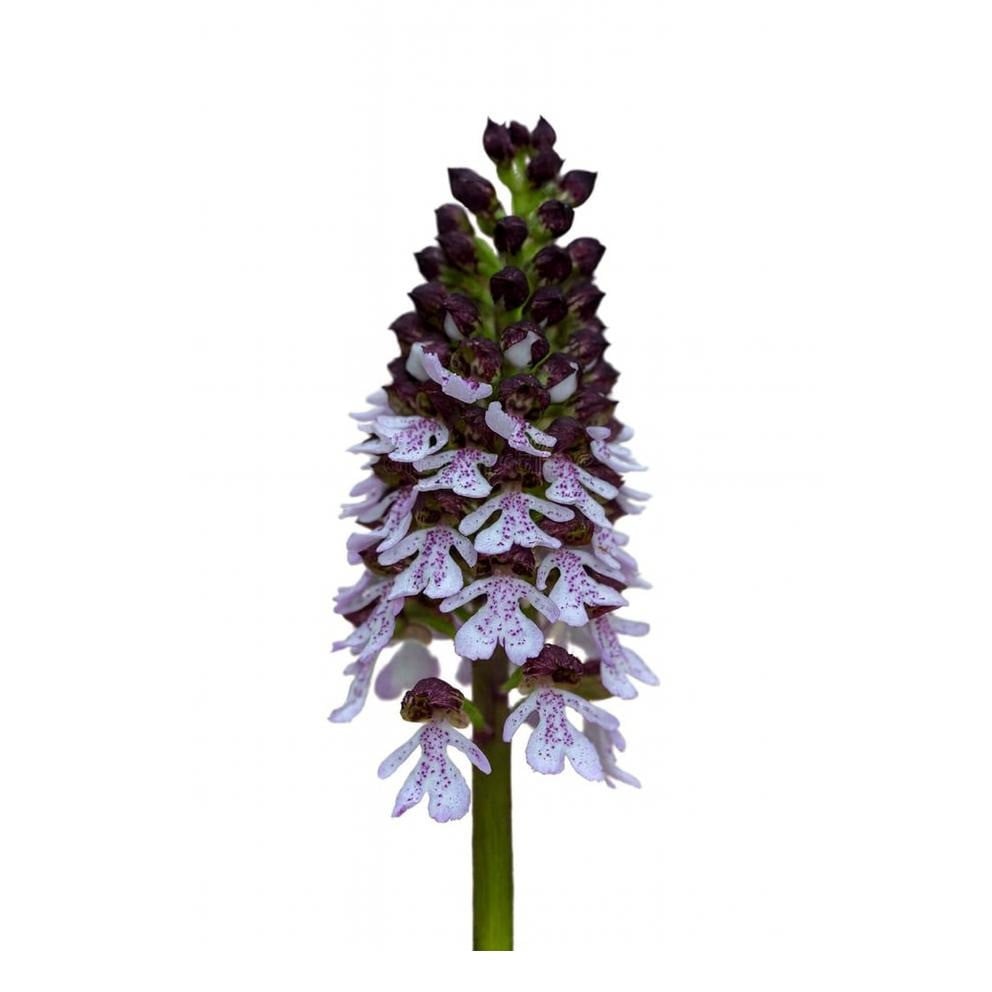
Orchids (Orchis) are a genus of plants in the orchid family (Orchidaceae). There are about 22 species of Orchis (Bateman 2009). All species of the genera Orchis and Dactylorhiza are strictly protected in Germany. The orchid species are perennial herbaceous plants. These geophytes form egg-shaped tubers as survival organs. One of the tubers withers at flowering time, the other is intended for the next flowering period (alternate tuber). In the past, it was assumed that the species of the genus Orchis need seven to nine years from germination to the formation of the first flowers; in fact, this period is considerably shorter. The above-ground parts are slightly poisonous and are avoided by livestock when fresh. The stem is leafy and usually has rosette-like clustered leaves at the base. It is unbranched and bears a terminal spike-like to racemose inflorescence. The stem leaves are usually sheath-shaped, elongated and with entire margins. The terminal inflorescence is usually many-flowered, cylindrical or ovoid. The sessile or stalked flowers are borne in the axil of a mostly membranous bract. The hermaphrodite flowers are zygomorphic and tripinnate. The labellum serves as a landing site for pollinators and is therefore directed downwards. The labellum usually also has a spur (exception: Orchis anthropophora). The other petals usually form a helmet-like protection for the pollinia. The separate pollinia are long-stalked and have separate adhesive disks, but sit in a common pouch (Bursicula). The seeds are very numerous and very small, often only ¼ mm in size and the thousand-grain mass is only about 0.5 to 2.5 milligrams. Because of the resemblance of the two tubers to testicles, the botanical genus name Orchis comes from the Greek word όρχις orchis for "testicle". (The root tubers of orchis species and ragworts used to be called testiculi satyrii). The Greek philosopher Theophrastos of Eresos was the first naturalist to mention orchids around 300 BC. He named them "Orchis" because of the paired root tubers and their resemblance to male genitalia, and established the idea, which was to be found in ancient writings for a long time, that women who ate the stronger and juicier of the two tubers would give birth to a boy. The German name "Knabenkraut" is also derived from this. Other names for representatives of the genus are Stendelwurz, Stendel and Satyrion. According to the doctrine of signatures, the orchis bulb was recommended as an aphrodisiac and by Paracelsus for testicular disorders. In classical Greek mythology, Orchis, the son of a satyr and a nymph, was killed by Bacchantes. Through his father's prayers, he was transformed into a plant that now bears his name.
Origin:
Europe, North Africa, West Asia
Growing tips
Location Light: Sunny to semi-shady, warm spots are ideal. Soil: Lime-rich, low in humus, well-drained, moderately dry to fresh. Suitable for: Nutrient-poor grassland, dry meadows, rock gardens, semi-natural areas. Planting Time: Fall or spring. Tubers: Plant flat, soil not too rich in nutrients. Spacing: 20-30 cm, as they form small clumps. Care Watering: Only water lightly during longer dry periods. Avoid waterlogging at all costs. Fertilization: No fertilization - they prefer lean soils. Hardiness: Fully hardy down to -20 °C. Propagation: By seed (slow, requires mycorrhizal fungi). Vegetatively by tuber formation. Special features Flowering time: May to July, depending on species. Flower colors: Pink, purple, violet, often with spots or markings. Height: 20-60 cm. Species diversity: In Europe, e.g. Orchis mascula (male orchid), Orchis militaris (helmet orchid), Orchis purpurea (purple orchid). Ecological importance: Important wild orchids, often an indicator of calcareous, poor habitats.

Companion Plants

Antagonistic Plants
Diseases
Root Rot
Grey mold
Fusarium
Powdery mildews
Pests
Land snails
Aphids
Voles