Abyssinian cabbage / Ethiopian mustard

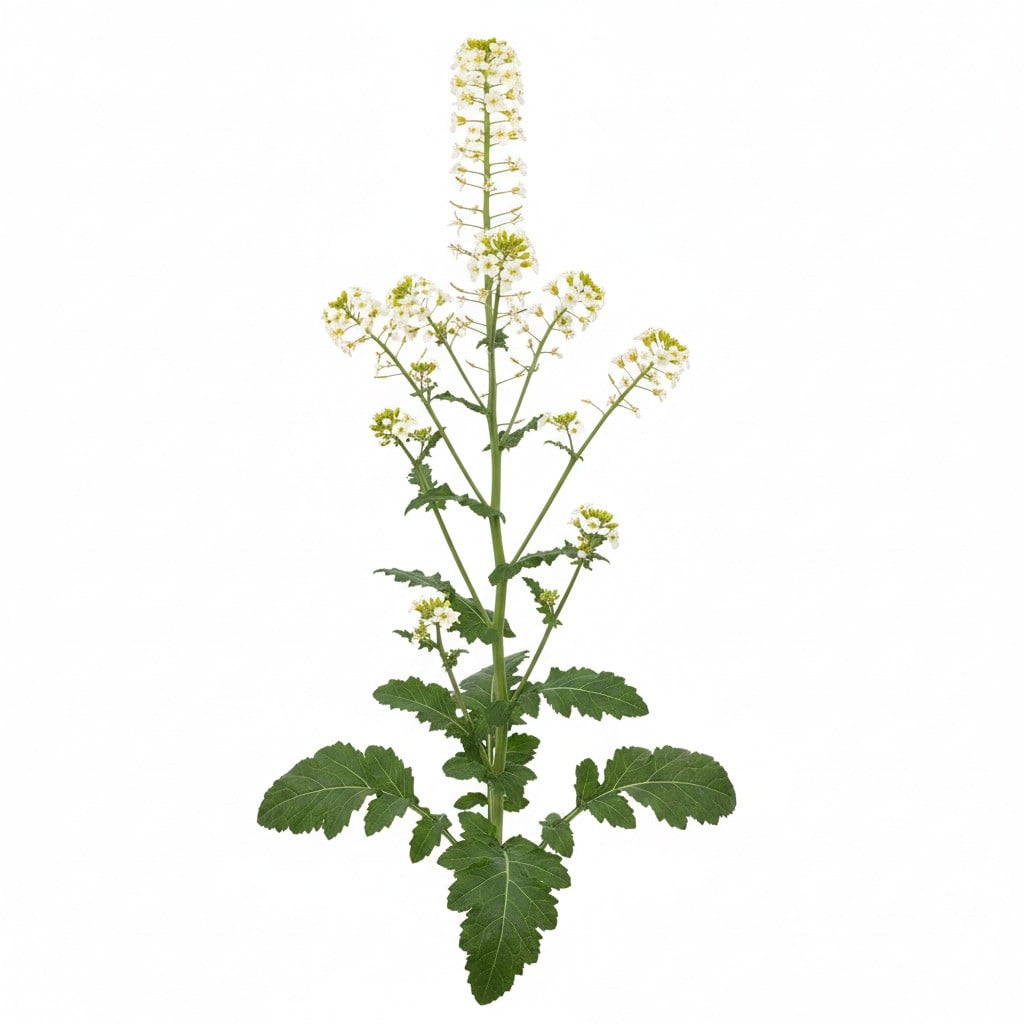
Abyssinian cabbage / Ethiopian mustard
Brassica carinata
Plant family
Crucifers (Brassicaceae)
Cultivation Break
4 Years
Season Overview
Propagating
Planting
Harvest
J
F
M
A
M
J
J
A
S
O
N
D
Details


Light requirement
Sunny

Water requirement
Moist

Soil
Medium (loamy)
Nutrient requirement
Medium

Dark germinator

Germination temperature
15 - 20 °C (Degrees Celsius)

Plant distance
5 cm

Row spacing
25 cm

Seeding depth
1 cm
Instructions
Description
Brassica carinata is a plant species from the cruciferous family (Brassicaceae). It is also known by the common names Ethiopian rape or Ethiopian mustard. It is thought to be a hybrid between Brassica nigra and Brassica oleracea. Representatives of the Brassica carinata species were cultivated in Ethiopia as early as the 4th millennium BC. Traditionally, the leaves and young shoots are used as vegetables and the seeds for the production of a type of mustard or for oil production. The plant has a mild taste and is eaten as a leafy vegetable. It is known as (Oromo : Raafuu); habesha gomen (Amharic : ሐበሻ ጎመን). One of the varieties is Texsel, which is particularly well adapted to temperate climates. The cultivation of Ethiopian mustard as a leafy vegetable is currently limited to small-scale production, but is slowly gaining popularity in both rural and urban areas where commercial cultivation takes place. Although Brassica carinata is grown as an oil crop in Ethiopia, it has high levels of undesirable glucosinolates and erucic acid (40-45%). The closely related species Brassica napus (rapeseed) is considered a better oil plant in comparison. Brassica carinata was used to develop a biofuel for aircraft engines. On October 29, 2012, the first flight of an aircraft powered entirely by biofuel from Brassica carinata took place. The by-product of Brassica carinata oil production is used in protein feed for animals. It is also suitable for the production of plastics, lubricants, paints, leather tanning, soaps and cosmetics.
Origin:
Ethiopia (highlands of Abyssinia), Eritrea
Growing tips
The climate in Ethiopia is largely temperate, but there are also longer periods of drought every year. The Abyssinian cabbage is well adapted to both, which is why it thrives well in our latitudes and also copes well with unfavorable conditions such as heat and drought. It only tolerates frost to a limited extent. It is sown outdoors in sets from March to September. In dry conditions, it must be well hoed and watered to prevent premature flowering. The planting distance should be approx. 25 x 2-5 cm. Early sowings can be covered with fleece or perforated film. Cultivation as a catch crop in a cold greenhouse over the winter months can be interesting. The plants are easy to care for and not very susceptible to disease. Problems with earth fleas (pitting of leaves) and shining beetles (damage to buds) can occur, especially in spring and summer. When grown in pots, fresh greenery can be harvested from the windowsill all year round. Separate to about 5 plants per 11 cm pot; excess plants are the first harvest. After 5-7 weeks, the tender stems and leaves can be harvested from a height of 15-20 cm. Either pick only the largest leaves as required or break/cut the entire plant at one time. Abyssinian cabbage can be used raw as a tasty addition to salads; steamed with a little salt and butter, it tastes like aromatic broccoli. The seeds can be used to make mustard or oil.

Companion Plants
Bean (Dwarf bean)
Bean (Runner bean)
Celery (Celeriac / Celery root)
Celery (Celery)
Celery (Leaf celery / Chinese celery)
Chives
Garlic
Lettuce (Common chicory)
Lettuce (Endive / Escarole / Erisée)
Lettuce (Lamb's lettuce)
Lettuce (Lettuce)
Lettuce (Oriental greens / Brown mustard)
Lettuce (Puntarelle / Cicoria di catalogna / Cicoria asparago)
Lettuce (Radicchio / Italian chicory)
Lettuce (Sugar loaf)
Onion
Onion (Spring onion)
Potato
Spinach (Summer)
Spinach (Winter)

Antagonistic Plants
Aubergine / Eggplant
Broccoli
Broccoli raab / Stem cabbage / Cima di rapa
Brussels sprouts
Brussels sprouts
Cabbage (Cabbage)
Cabbage (Pointed cabbage)
Cabbage (red cabbage)
Cabbage (Savoy cabbage)
Cauliflower
Chili
Chinese kale - Kai-lan / Chinese broccoli
Collard greens
Collard greens (Kale)
Collard greens (Tuscan kale / Dinosaur kale / Palm tree kale)
Corn / Maize
Courgette / Zucchini
Cucumber / Gherkin
Kohlrabi / German turnip / Turnip cabbage
Mustard
Napa cabbage / Chinese cabbage
Okra
Pepper / Paprika
Radish
Radishes
Rapeseed - Sheer cabbage / Siberian cabbage
Strawberry
Tomato (Bush tomato)
Tomato (Cocktail bush tomato)
Tomato (Cocktail Stake Tomato)
Tomato (Stake tomato)
Vegetable cabbage - Forage cabbage
Vegetable cabbage - Ribbed cabbage / Portuguese cabbage
Vegetable cabbage - wild cabbage / ancient cabbage
Diseases
Root Rot
Black spot of roses
Club root of cabbage
Grey mold
Powdery mildews
Pests
Land snails
Caterpillars
Cabbage white
Cabbage fly
Cabbage heart midge
Flea beetles
Aphids