Chives

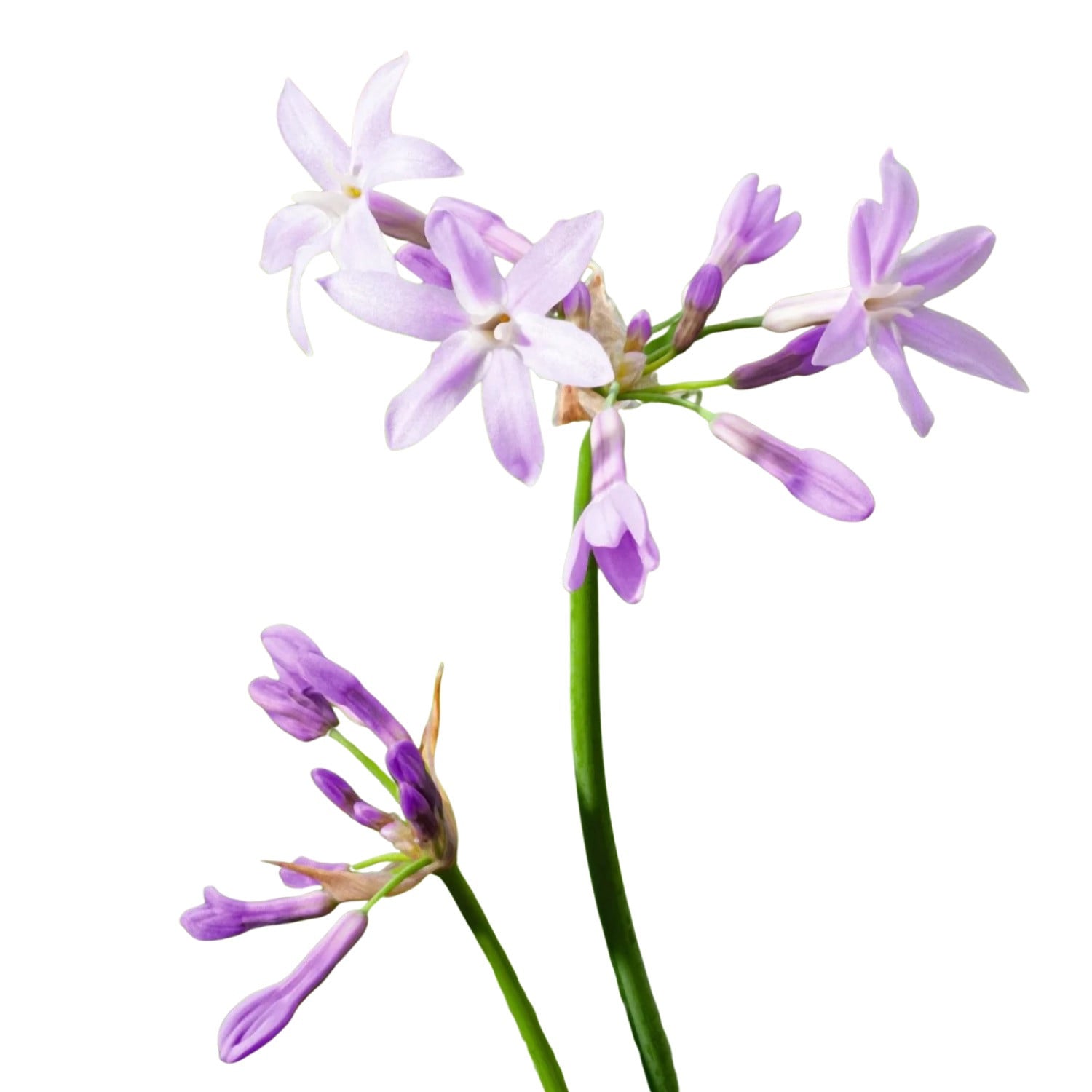
Chives
Tulbaghia
Plant family
Amaryllis family (Amaryllidaceae)
Season Overview
Sowing
Harvest
Harvest
J
F
M
A
M
J
J
A
S
O
N
D
1ST YEAR
FOLLOWING YEARS
Details


Light requirement
Sunny

Water requirement
Dry

Soil
Light (sandy)

Nutrient requirement
Low

Plant distance
25 cm

Row spacing
40 cm

Seeding depth
0.5 cm
Instructions
Description
Garlic grass - your versatile fragrant plant with an edible bonus! Are you looking for an easy-care perennial with Mediterranean flair that is both decorative and edible? Garlic grass, also known as "Society Garlic", is a true all-rounder for the flower bed and kitchen! What makes it so special - Flowering: Delicate purple umbels from June to September - Aroma: Mild garlicky scent (without annoying vapors) - Growth habit: Forms pretty grass-like clumps (30-50 cm high) - Winter hardiness: Up to around -10°C (winter protection advisable in harsh locations) Culinary use - Leaves: Finely chopped like chives for salads, soups or herb butter - Flowers: Edible decoration for summer dishes - Special feature: Tolerated alternative for garlic allergy sufferers Practical tips - Ideal for herb spirals and rock gardens - Acts as a natural moth repellent in the closet - Perfect bee pasture in summer Why it enriches your garden: This uncomplicated plant combines ornamental value with utility - its delicate flowers attract bees, while the leaves enrich your kitchen. And best of all: unlike real garlic, the smell only sticks to your fingers, not your breath! Tip: Plant it in groups of 3-5 specimens - this will show off the purple flowers particularly well. You can harvest the leaves all year round as long as it is frost-free. Garlic grass (Tulbaghia violacea) is often confused with the more common cut garlic (Allium tuberosum) and sometimes traded as such. Who it's perfect for: - Herb lovers with little space - City gardeners (also tolerates air pollution) - Anyone who appreciates edible ornamental plants Tulbaghia violacea brings Mediterranean flair to your garden - without the annoying garlic scent!
Origin:
South Africa
Growing tips
- Sun: Full sun for abundant flowering

Companion Plants
No companion plants

Antagonistic Plants
No antagonistic plants
Diseases
Root Rot

Pests
No pests