Baby's breath

Baby's breath
Gypsophila
Plant family
Pink or Carnation family (Caryophyllaceae)
Season Overview
Propagating
Planting
Harvest
Harvest
J
F
M
A
M
J
J
A
S
O
N
D
1ST YEAR
FOLLOWING YEARS
Details


Light requirement
Sunny

Water requirement
Moist

Soil
Light (sandy)

Nutrient requirement
Low

Light germinator

Germination temperature
18 - 20 °C (Degrees Celsius)

Plant distance
40 cm

Row spacing
40 cm

Seeding depth
0.2 cm
Instructions
Description
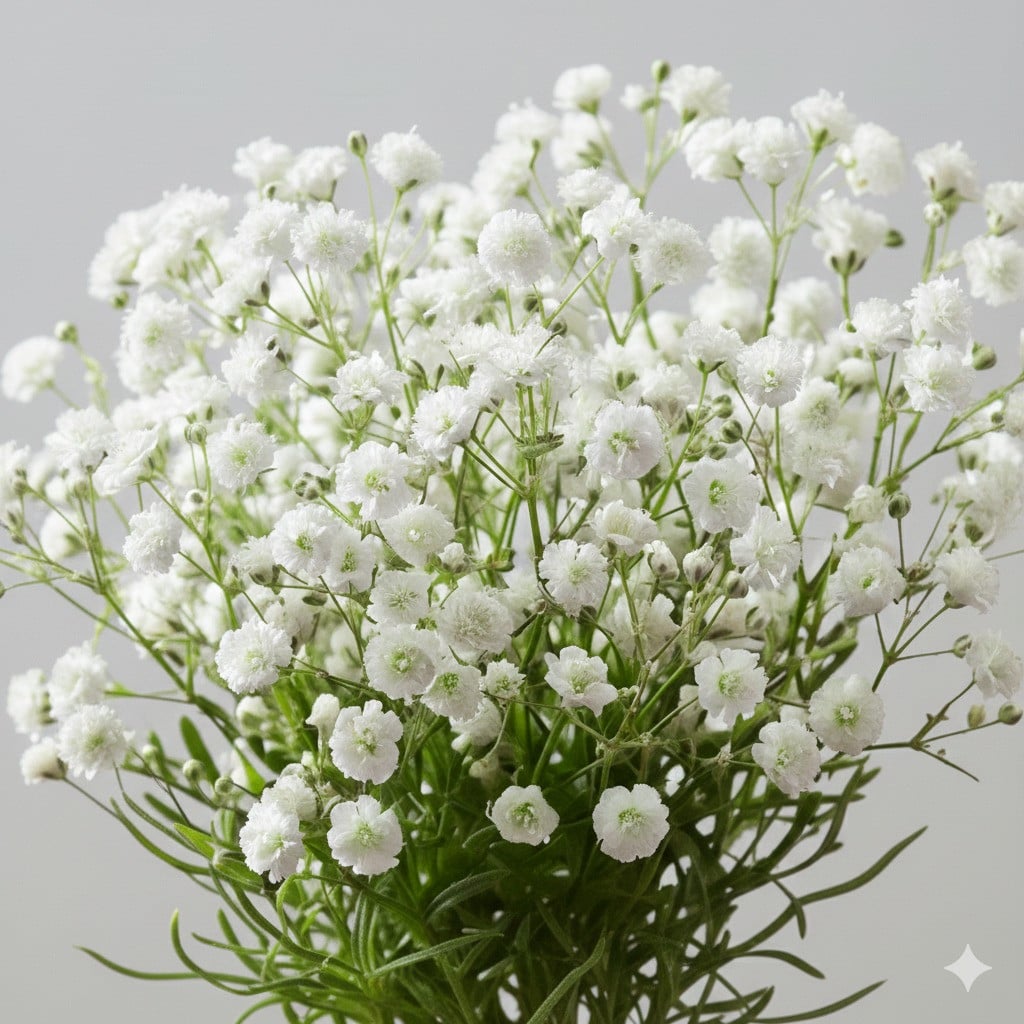
Gypsophila comes from the clove family (Caryophyllaceae). There are two perennial species that are relevant for our gardens: The giant gypsophila (Gypsophila paniculata) and the carpet gypsophila (Gypsophila repens). The tall gypsophila is originally from the Rocky Mountains, but has also become wild in the wild on stony, sandy areas from south-eastern Europe to western Siberia. Carpets of cushion gypsophila can be found in the mountains of Central Europe, especially in the Alps and Pyrenees on nutrient-poor grasslands and gravel meadows. Over the course of time, the tall gypsophila grows into a semi-round perennial that reaches a height and width of one meter. As soon as the plant blossoms, it resembles a feathery white cloud with its hundreds of small flowers that bloom in the form of airy panicles on the branched stems. The carpet gypsophila, which is often used as a ground cover, is no less densely covered with flowers, but only reaches a height of around 25 centimetres above the ground. The flowering magic of the gypsophila lasts from June to September. There are very pretty varieties that bloom pink or have double flowers. The small leaves of the plants are lanceolate and gray-green to blue-green in color.
Origin:
Rocky Mountains, Southeast Europe, Western Siberia, Central Europe
Growing tips
The botanical genus name reflects the gypsophila's preference for lime-rich soils. Gypsophila, also known as gypsophila, is made up of the Greek words "gypso" (gypsum) and "philos" (friend). It is very important for its well-being in the garden that the soil is permeable. This is because if moisture builds up, the deep taproots of the plants rot, especially in winter. According to its origin, the gypsophila loves lean substrates such as sand or gravel and warm, sheltered and sunny garden spots, although the cushion gypsophila likes its feet to be a little fresher and cooler.


Antagonistic Plants

Diseases
Root Rot
Pests
Land snails