Eucalyptus

Eucalyptus
Eucalyptus
Plant family
Season Overview
Sowing
J
F
M
A
M
J
J
A
S
O
N
D
Details


Light requirement
Sunny

Water requirement
Moist

Soil
Light (sandy)
Nutrient requirement
Low

Plant distance
100 cm

Row spacing
150 cm

Seeding depth
Not specified
Instructions
Description
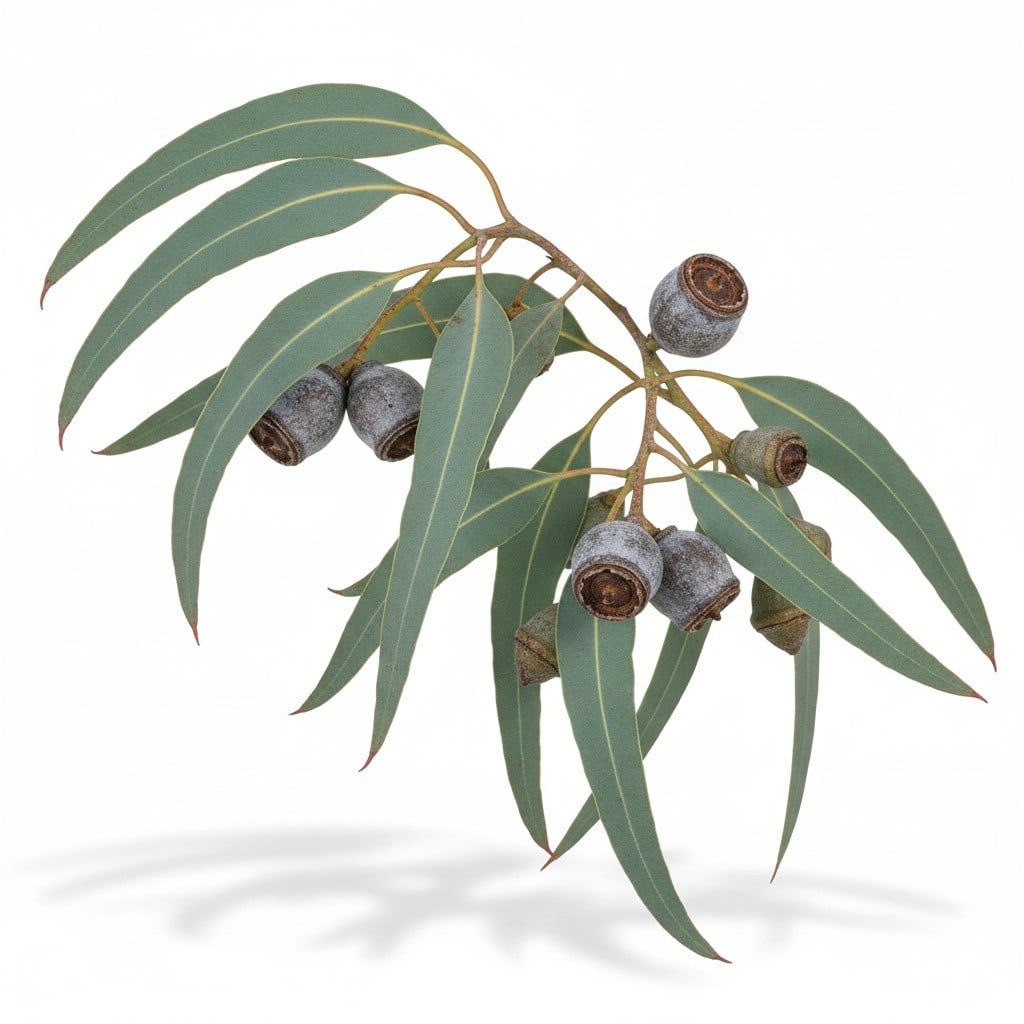
Eucalyptus trees and shrubs are evergreen plants that can grow from a few meters to over 60 meters depending on the species. The bark varies greatly between species and can be smooth, fibrous or scaly. Young leaves are often rounded and opposite on the branches, while older leaves are lanceolate and alternate. Many species contain essential oils that give off an intense fragrance. The flowers are usually creamy white, yellow or reddish and consist of numerous stamens that form a striking structure. The fruit is a so-called capsule fruit, which contains small, often very fine seeds.
Growing tips
Eucalyptus should be slowly acclimatized to full sun at the beginning to avoid sunburn. Regular pruning is recommended to promote compact growth. Care should be taken to ensure that the substrate is well-drained, as eucalyptus is susceptible to root rot if the soil is too wet. Eucalyptus grows quickly in containers, so it is important to adjust the pot regularly to provide enough space for the roots. Transplanting should be done sparingly, as the roots are sensitive to disturbance. Older plants are very drought-resistant and require little water. In colder regions, it is advisable to choose frost-hardy eucalyptus species or to bring sensitive varieties indoors during the winter.

Companion Plants

Antagonistic Plants

Diseases
Powdery mildews

Pests
Thrips
Spider mites
Schildläuse
Chervil moth
Aphids